One tree. Four communities in the dark.
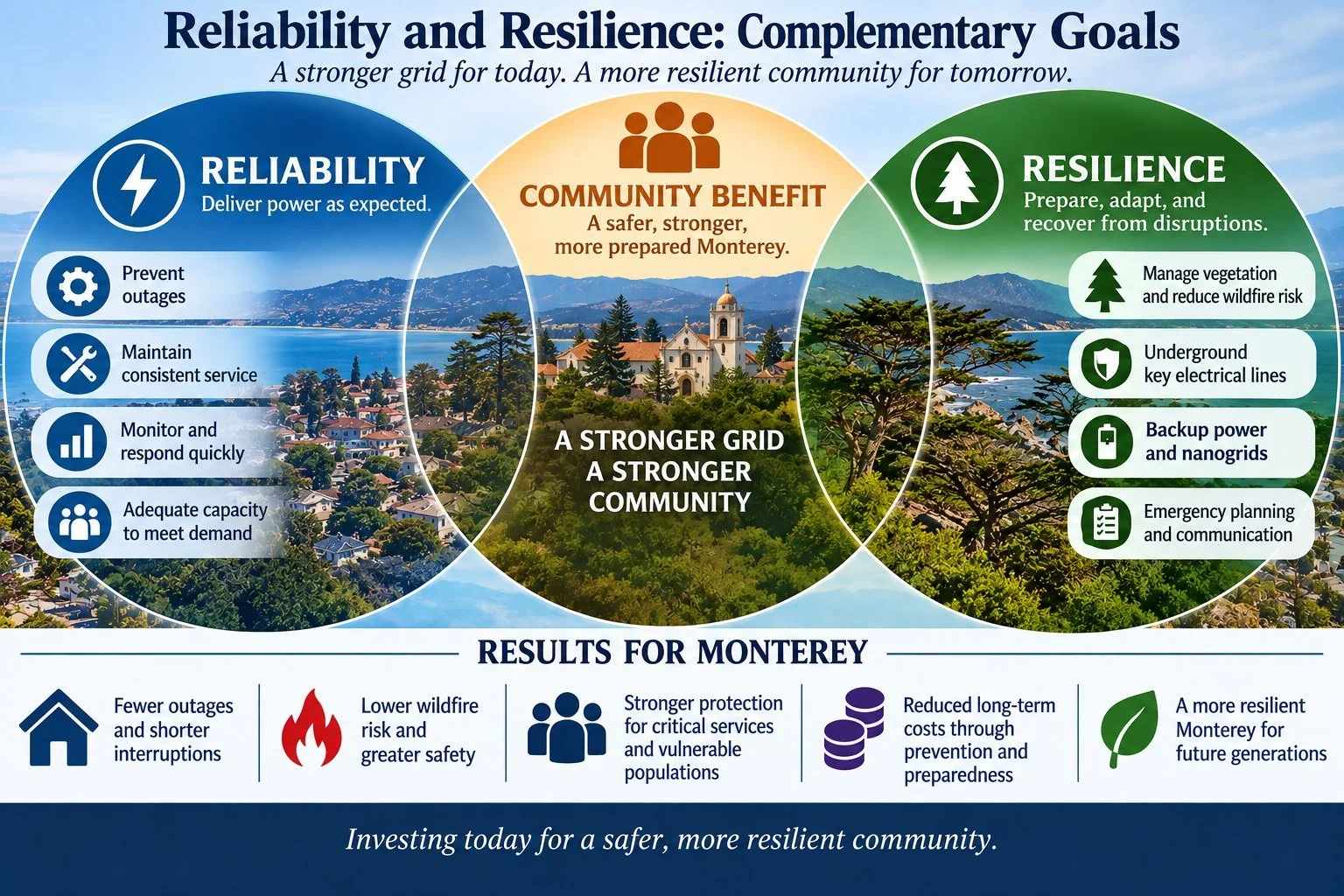
We notice infrastructure when it fails. Underground lines are shielded from the wind, falling trees, and vehicle collisions that bring overhead lines down, so the power stays on more often.
The Del Monte Avenue outage, March 2023
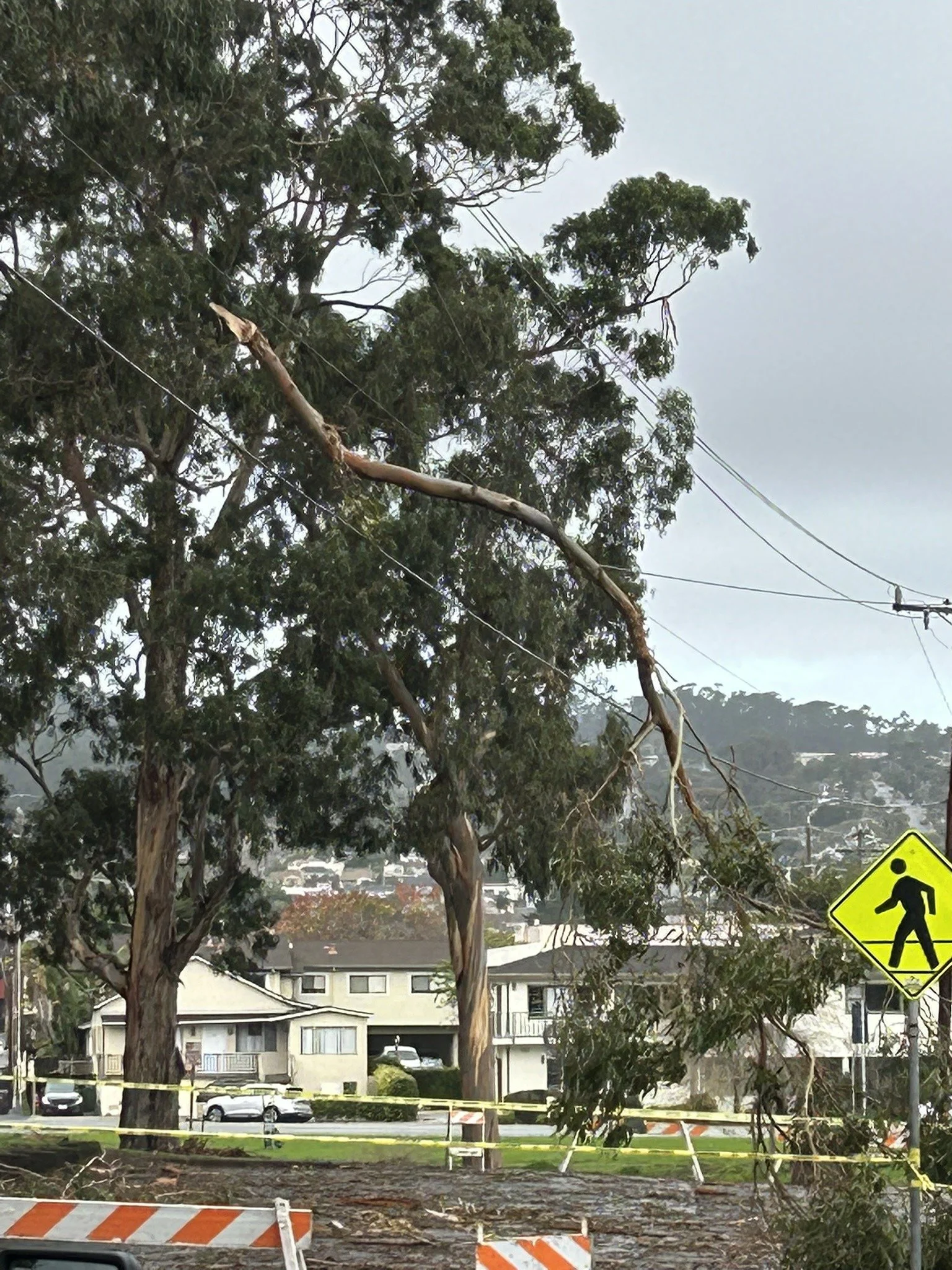
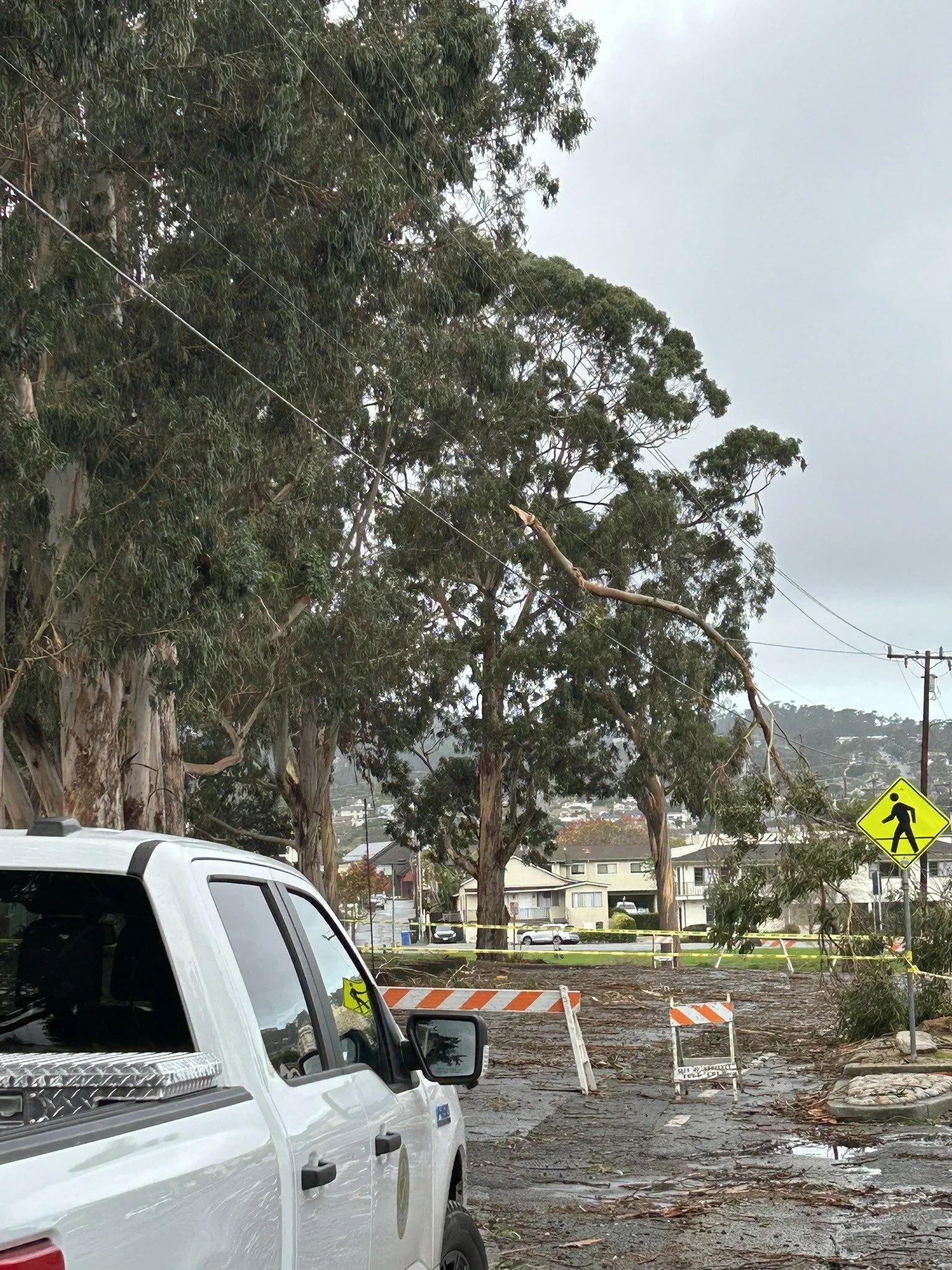
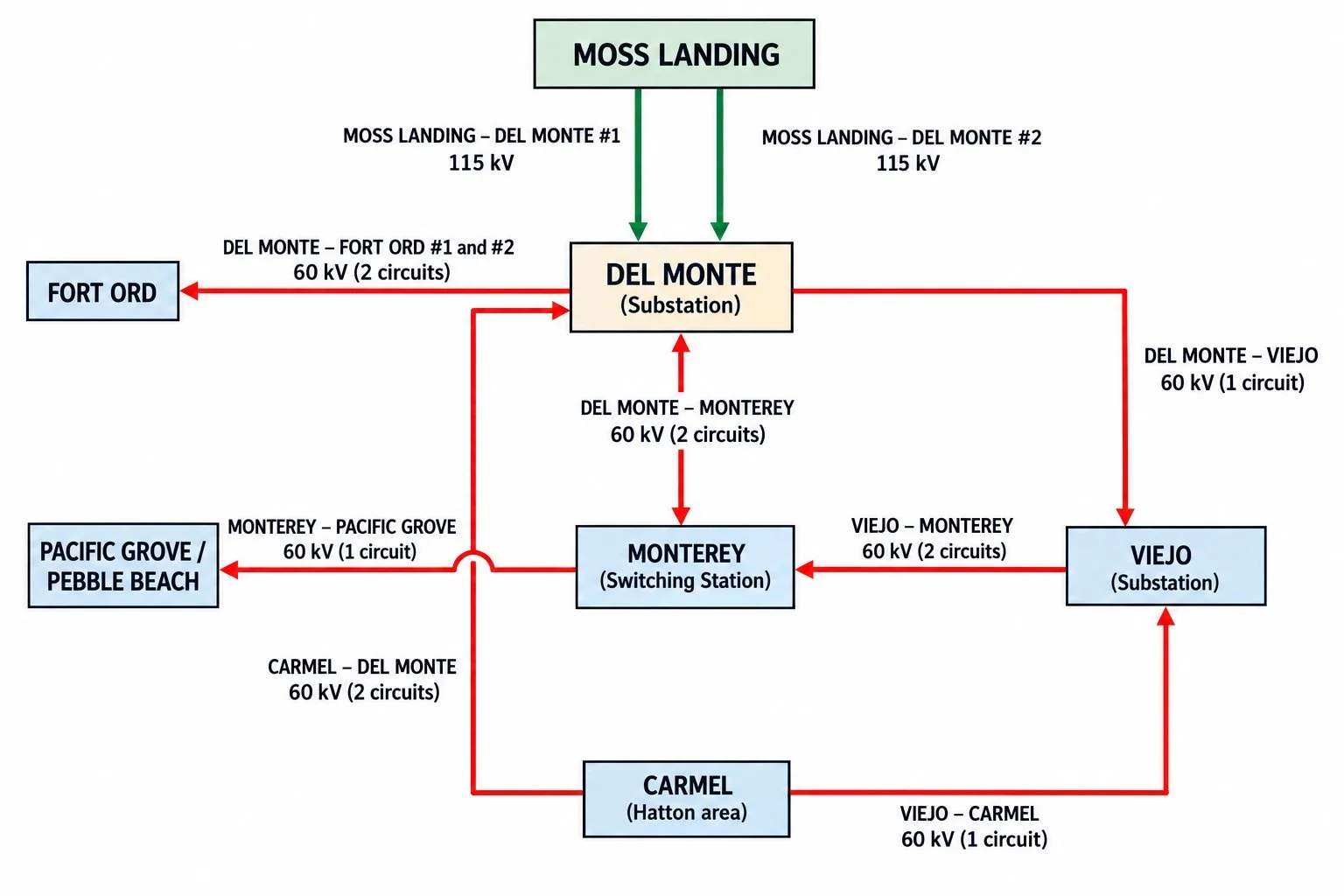
During a major storm, a falling tree struck a utility pole carrying two 60 kV feeder lines along Del Monte Avenue. Tens of thousands of customers lost power across Monterey, Pacific Grove, Pebble Beach, and Carmel. Some were restored quickly. Others waited much longer.
The effects went well beyond the lights. Businesses closed or limped along, losing refrigerated stock and revenue. Residents lost food, internet, and the ability to work from home. People who rely on powered medical equipment faced real danger.
Why one failure spreads so far
Power reaches your home in steps. High-voltage lines bring it to the Peninsula. 60 kV lines carry it between substations. Smaller distribution lines deliver it to streets and homes. A few key corridors serve very large areas. When two backup lines share the same poles, in the same trees, a single event can knock out both.
Underground streets can still lose power
The 2023 outage showed that a neighborhood with buried lines can still lose power when the lines feeding it are overhead. The Skyline Forest neighborhood is underground, but its supply from Viejo Substation still runs overhead through dense forest. Protecting the upstream corridors matters as much as protecting the street.
What the evidence shows
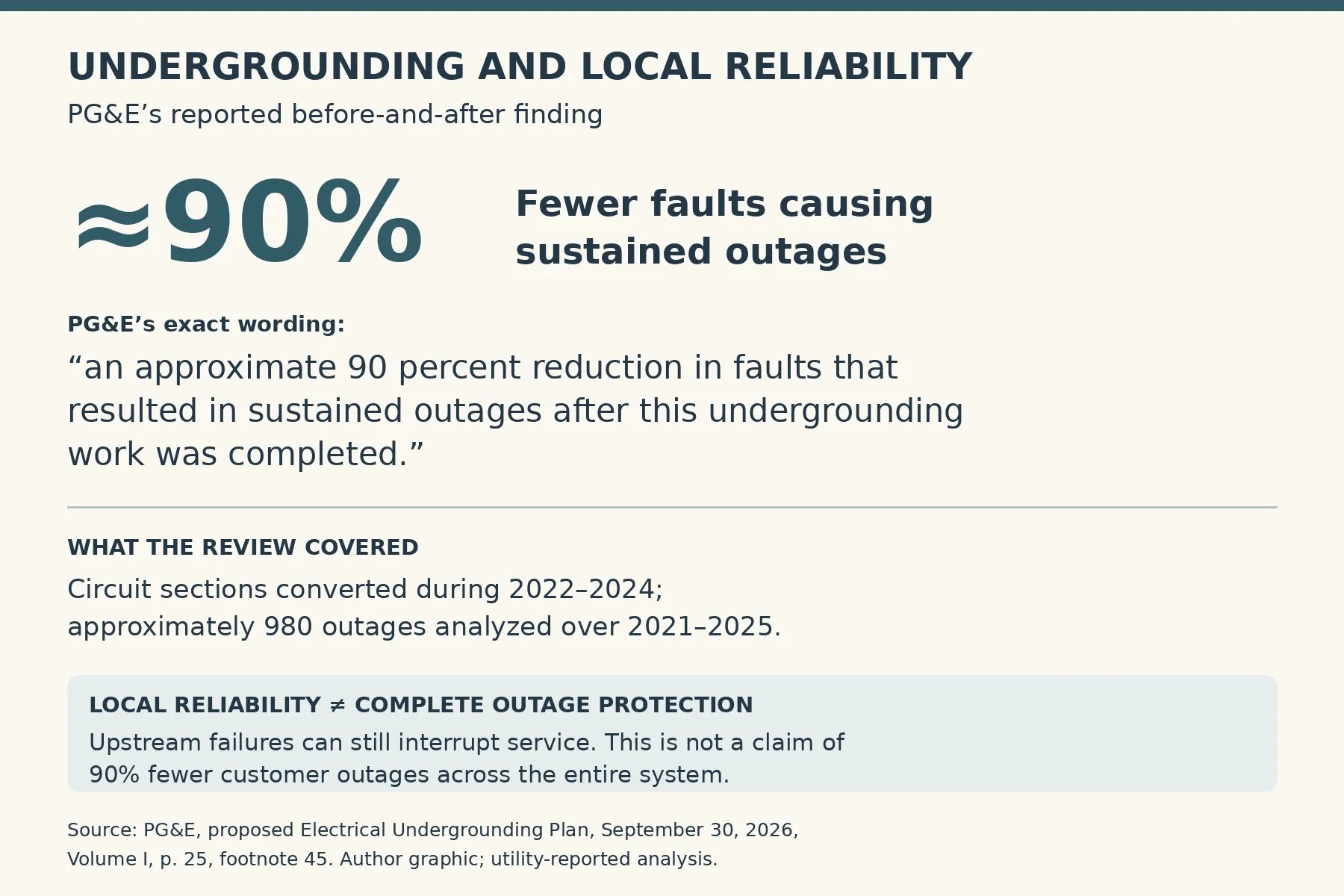
PG&E reports about 90 percent fewer faults causing sustained outages on circuit sections after undergrounding. Source: PG&E proposed Electrical Undergrounding Plan, September 2026.
What PG&E has already improved
PG&E has installed a new transformer at a major Peninsula-serving substation, replacing a 30 MVA unit with a 75 MVA transformer (about 2.5 times the capacity), plus switching upgrades that help reroute power and restore service faster. These help after a failure. They do not remove the exposure of overhead wires to trees, storms, and collisions.
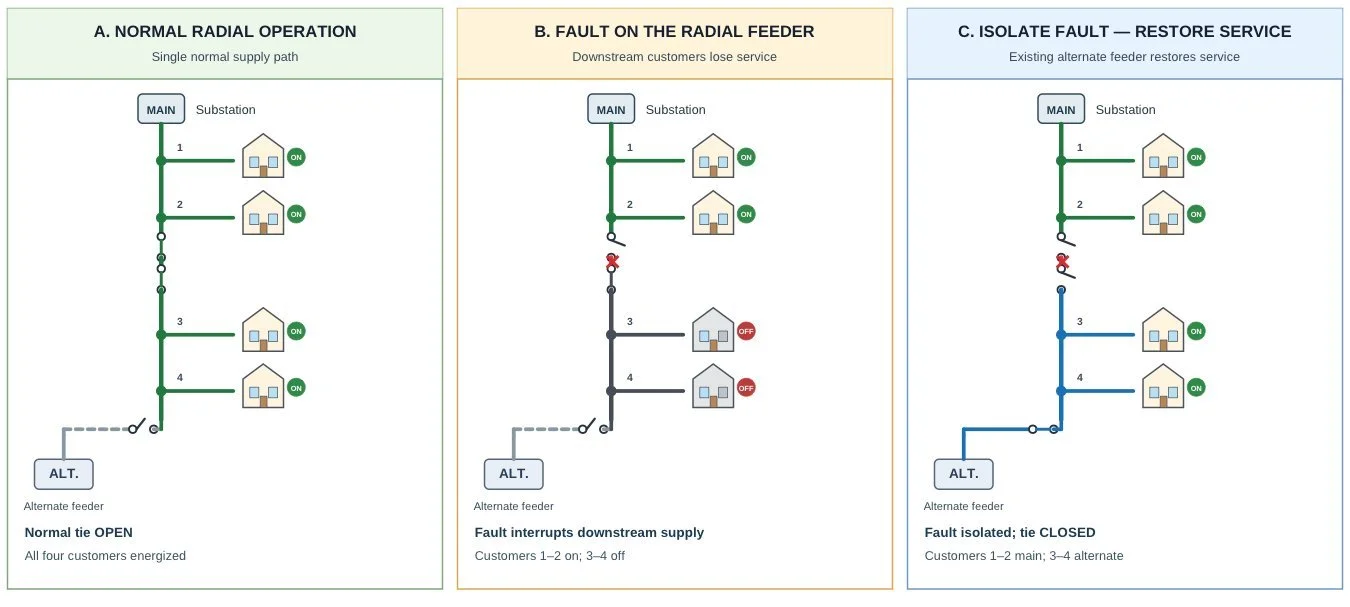
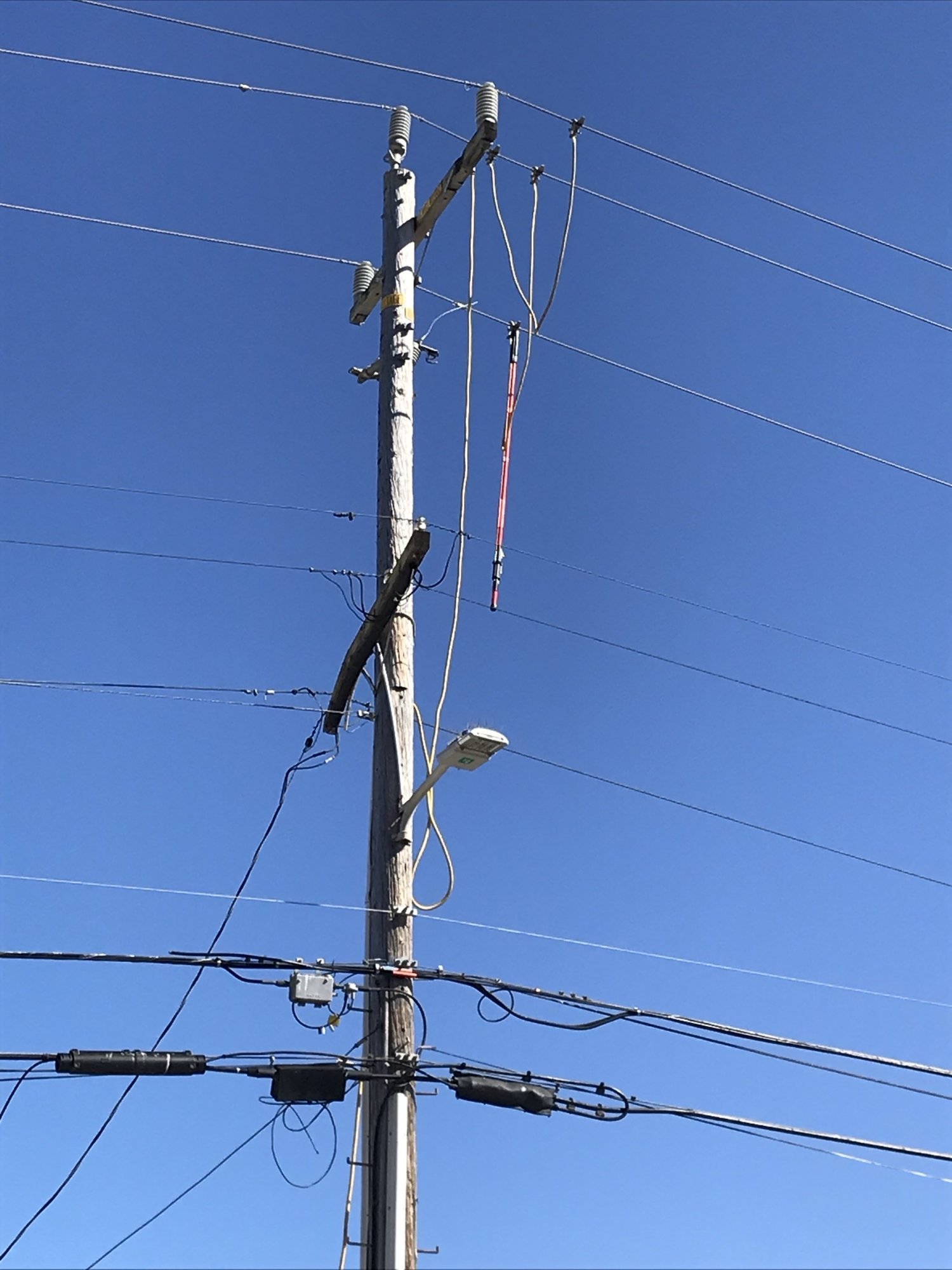
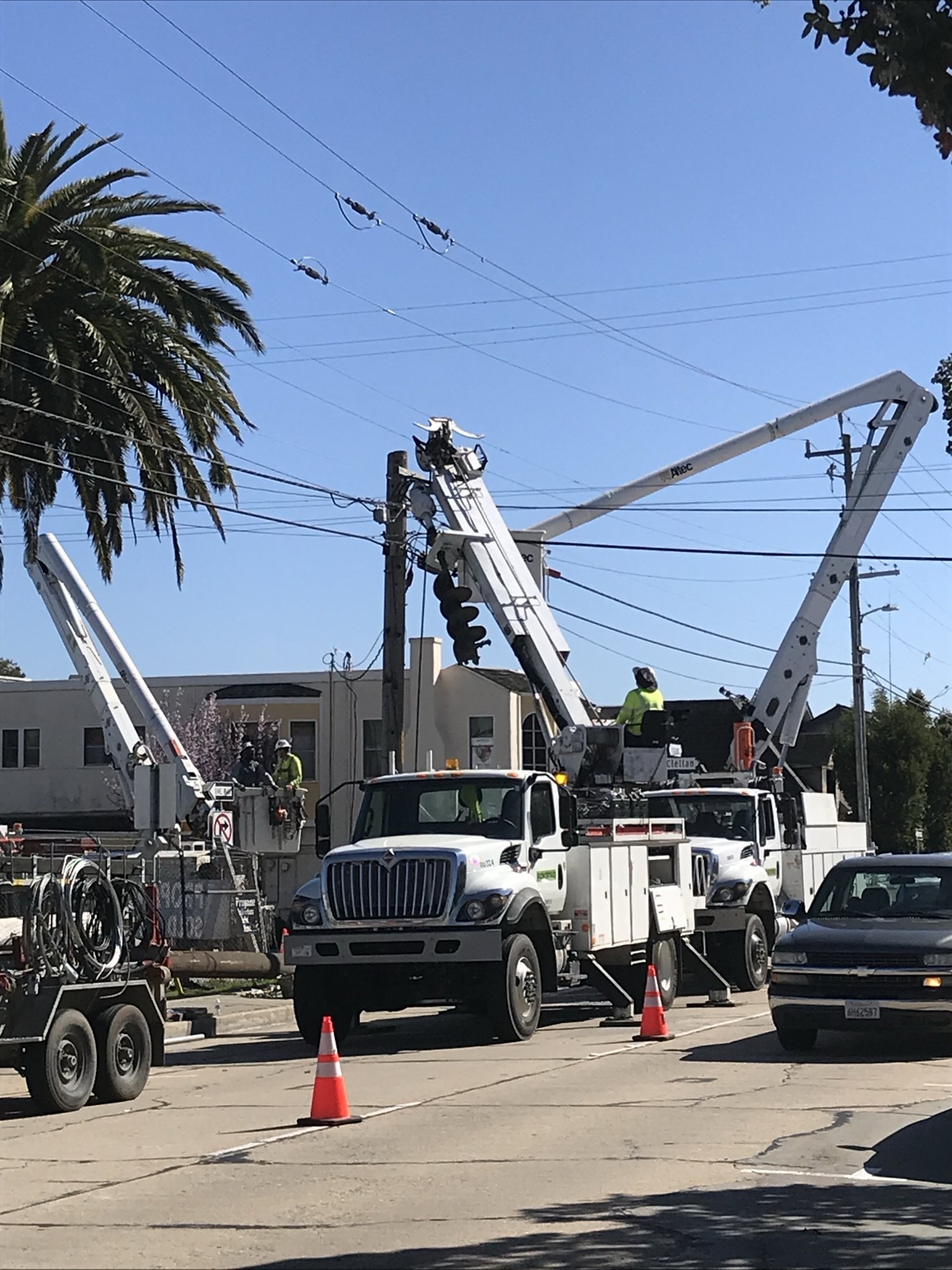
The Downtown Switching Station shows how this works. Several 60 kV circuits meet near it, and operators can isolate a damaged section and send power around it when another path has room to carry the load.
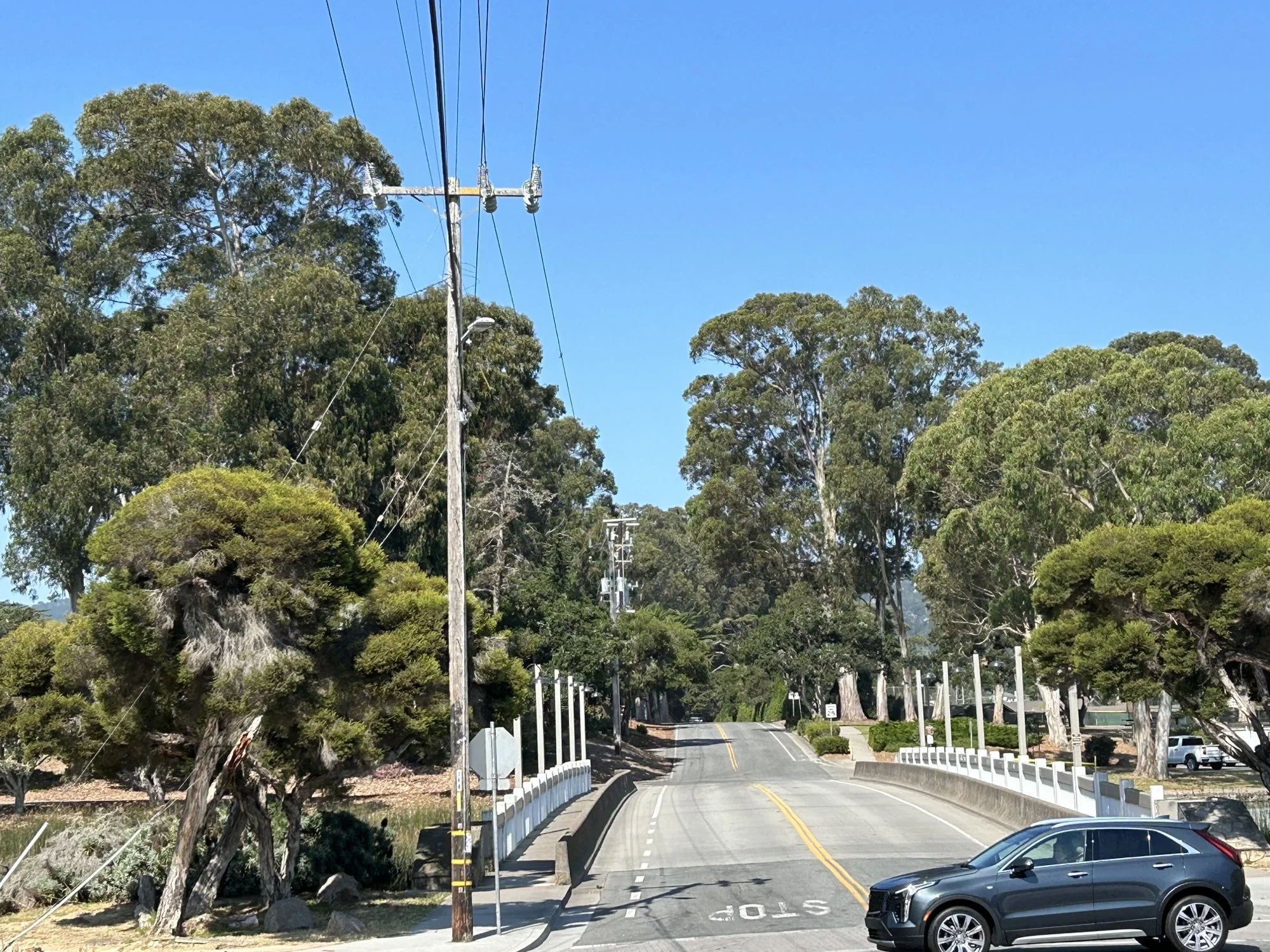
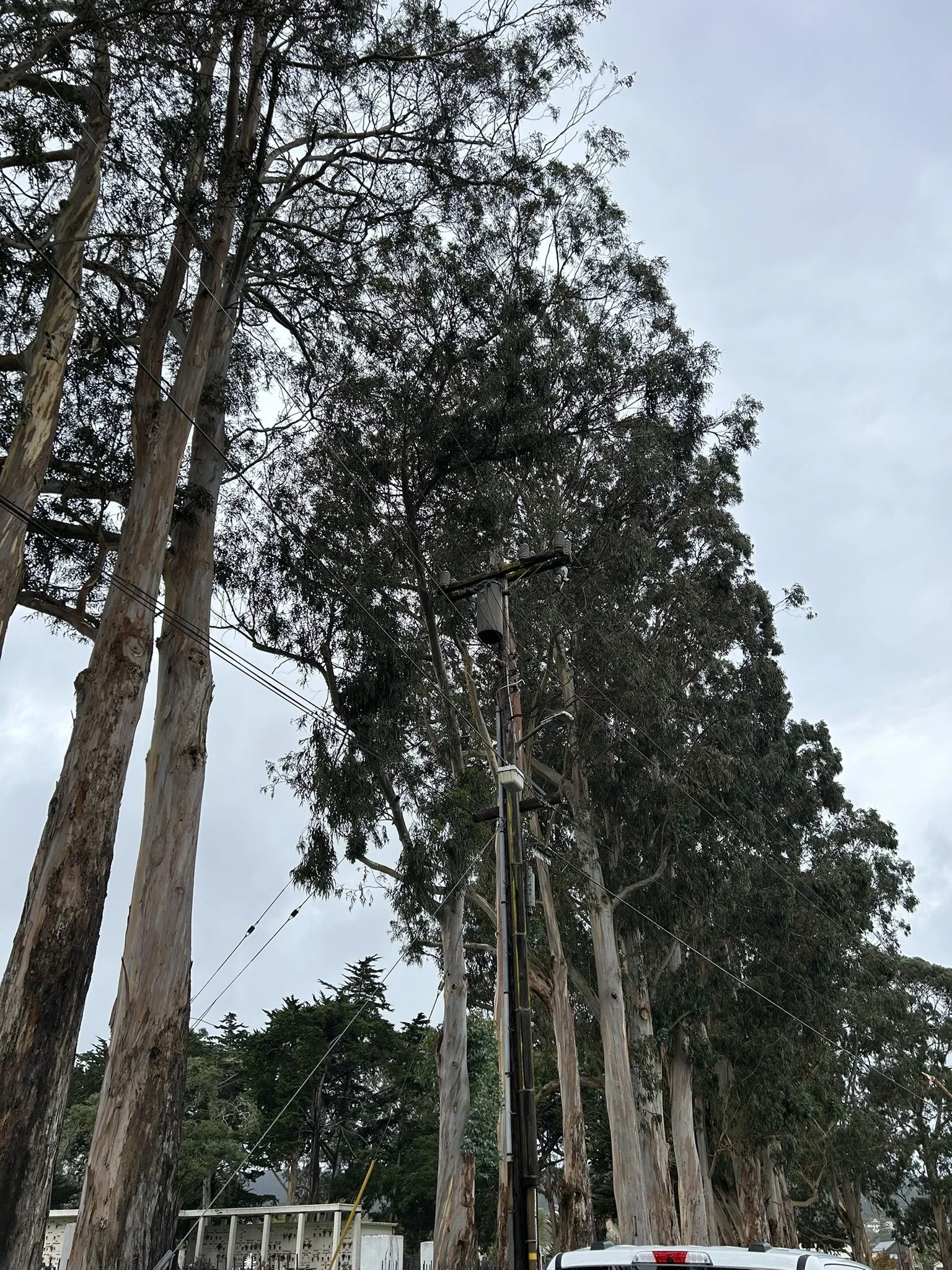
Switching cannot prevent the failure itself. If the backup path runs through the same trees or on the same poles, one event can take out both. Engineers call this a common-mode vulnerability. Along Del Monte Avenue, both 60 kV circuits run together through a stand of mature eucalyptus, so the backup is only as safe as the corridor it shares.
The Viejo feeder to Skyline
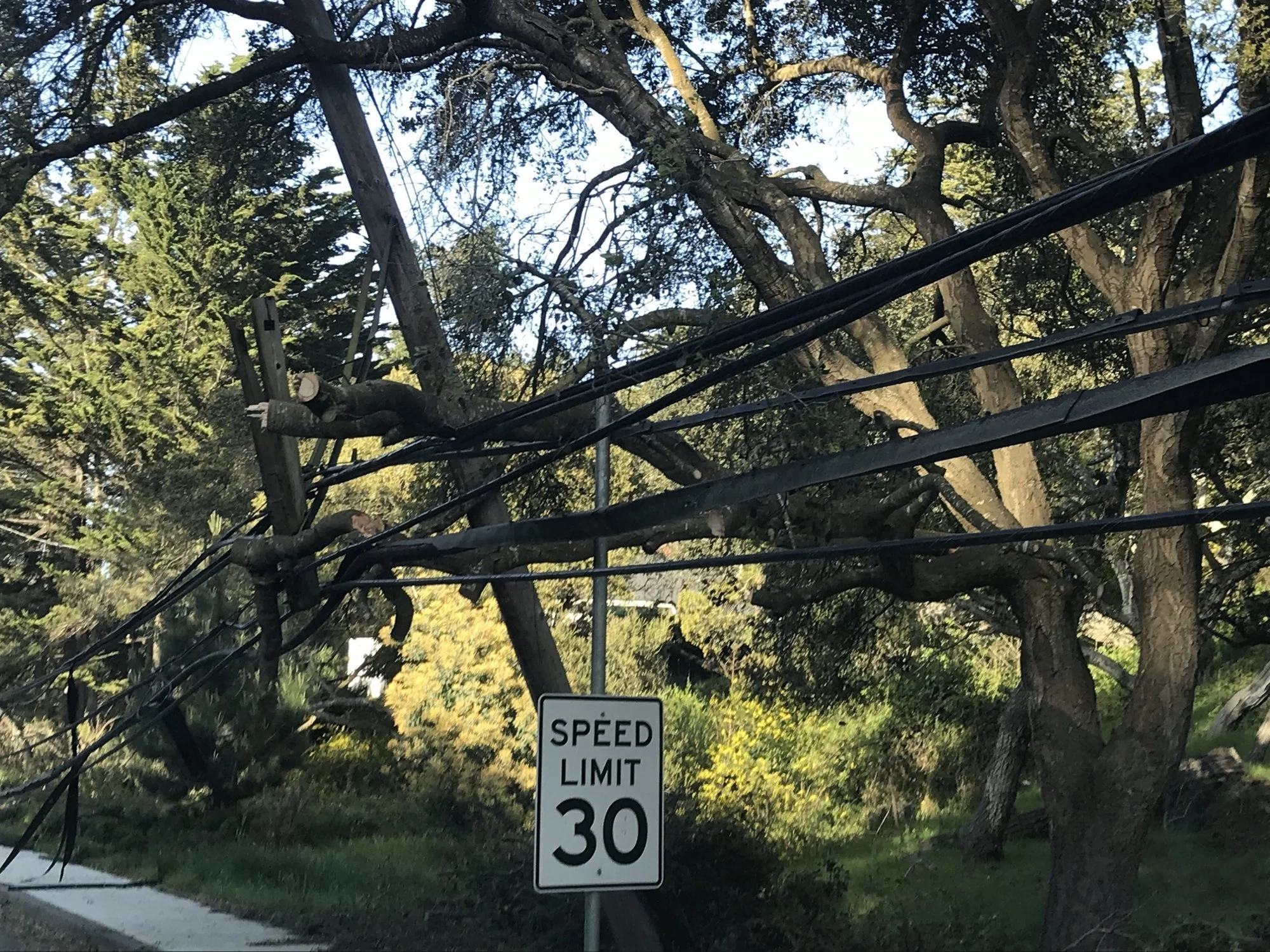
Skyline Forest has been underground since it was built. But its power arrives on a 21 kV feeder from Viejo Substation that runs about half a mile overhead through dense pine, oak and cypress. PG&E prunes the corridor heavily, yet clearances stay tight. One tree on that feeder can darken every home in Skyline while the buried wiring inside the neighborhood works perfectly.
PG&E's September 2026 filing lists twelve Viejo circuit segments as eligible for further screening. Eligibility is not a selected project or a construction commitment, and the public filing does not say which segment serves the Skyline corridor. That is a question for PG&E.
The big feeders are a harder problem
Burying the 60 kV feeder lines is technically possible but costs several times more per mile than burying neighborhood lines. PG&E's proposed ten-year plan covers distribution lines only, so these corridors would need their own engineering and funding study.
Undergrounding plus local energy
Undergrounding reduces how often the power goes out. Home solar and batteries reduce the harm when it does. The two work together, as Chapter 15 of Undergrounding Monterey, "Energy Resilience, Nanogrids, Distributed Energy Resources, and Microgrids" (Volume III, page 207), explains how.
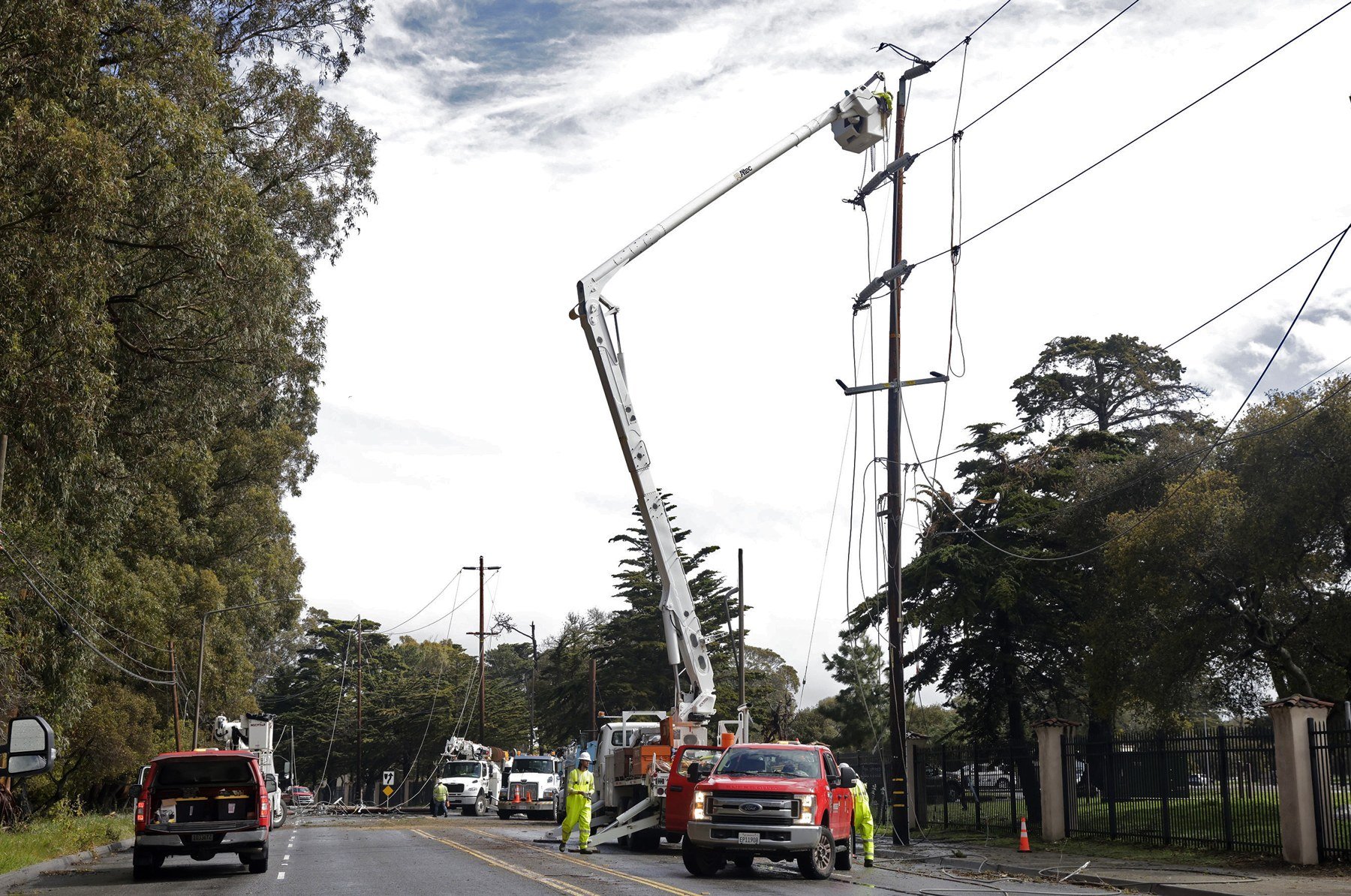
Crews repair the storm-damaged 60 kV line along Del Monte Avenue, March 2023. Credit: Daniel Dreifuss / Monterey County Weekly. Used with permission.
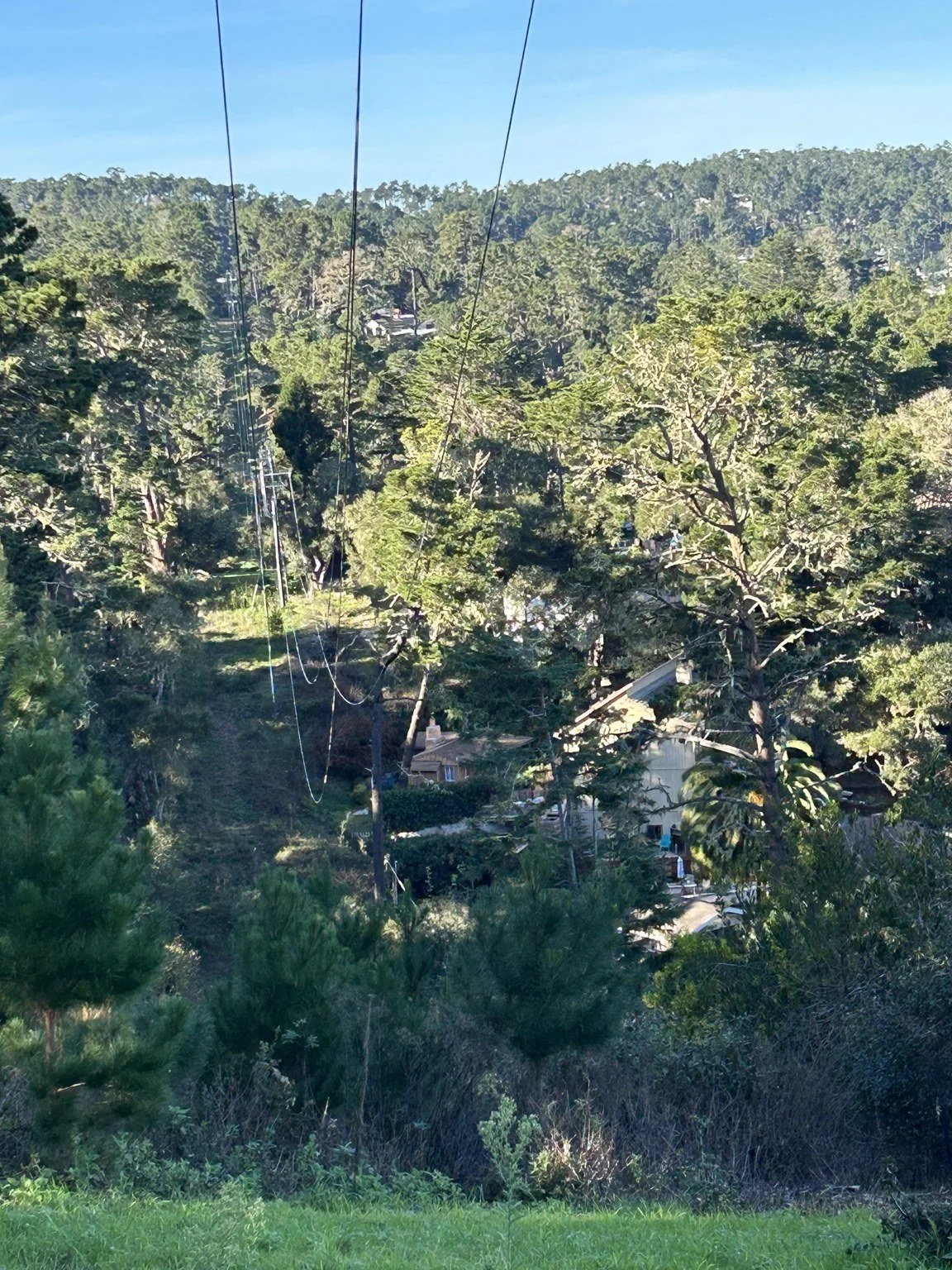
Overhead feeder corridor through dense forest toward Skyline. Photograph by Raymond Meyers.
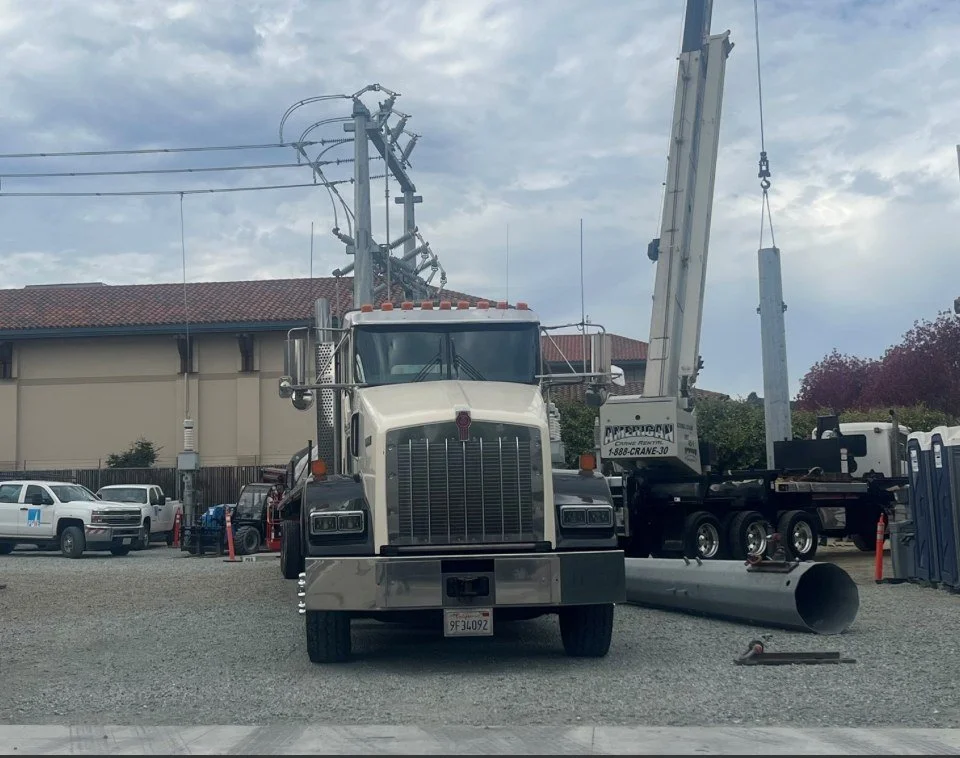
A PG&E truck and crane installing new equipment at the Downtown Switching Station. Photograph by Raymond Meyers.
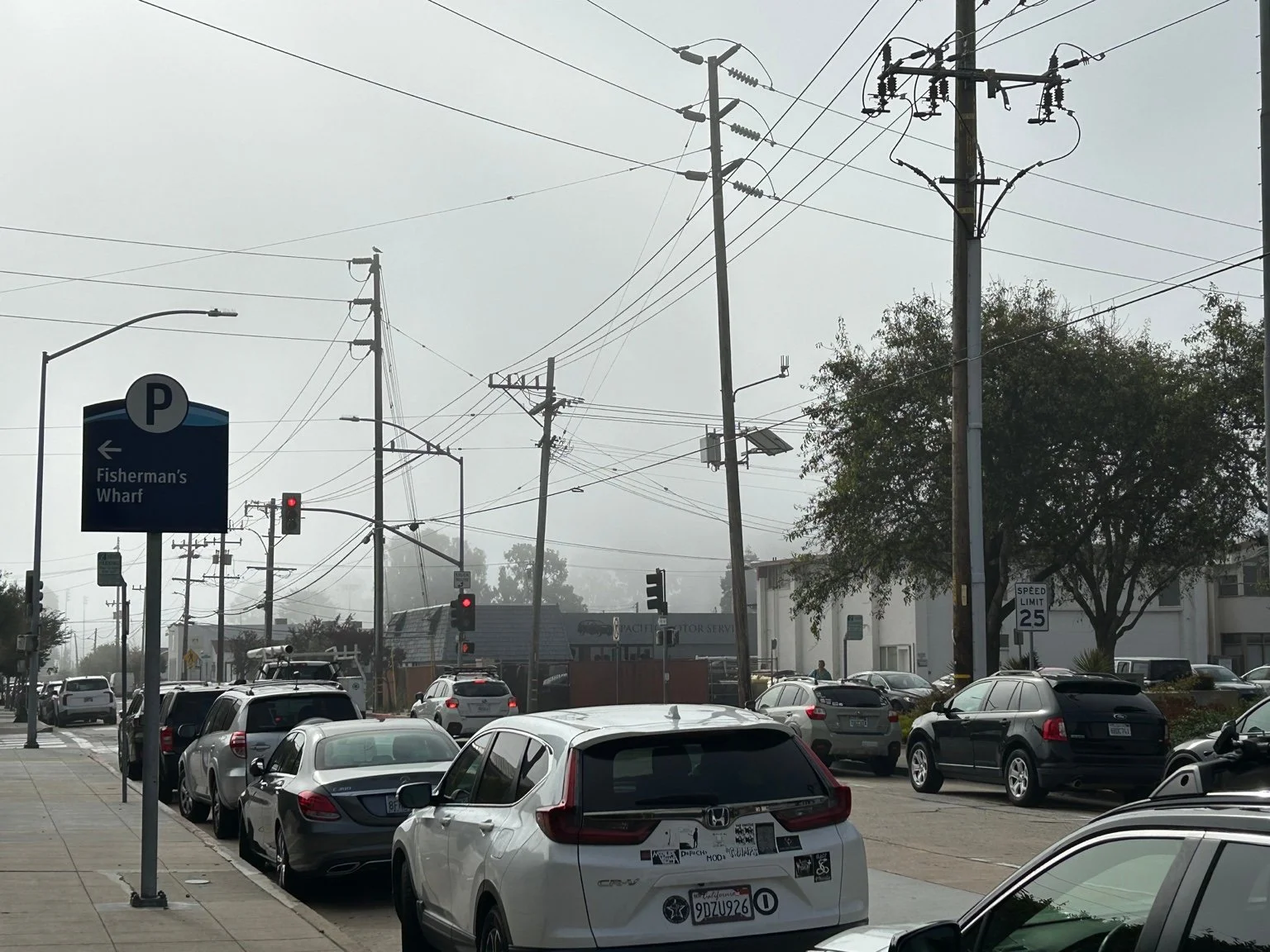
The poles and conductors leading into the Downtown Switching Station from Franklin and Figueroa streets, seen from the station. Photograph by Raymond Meyers.
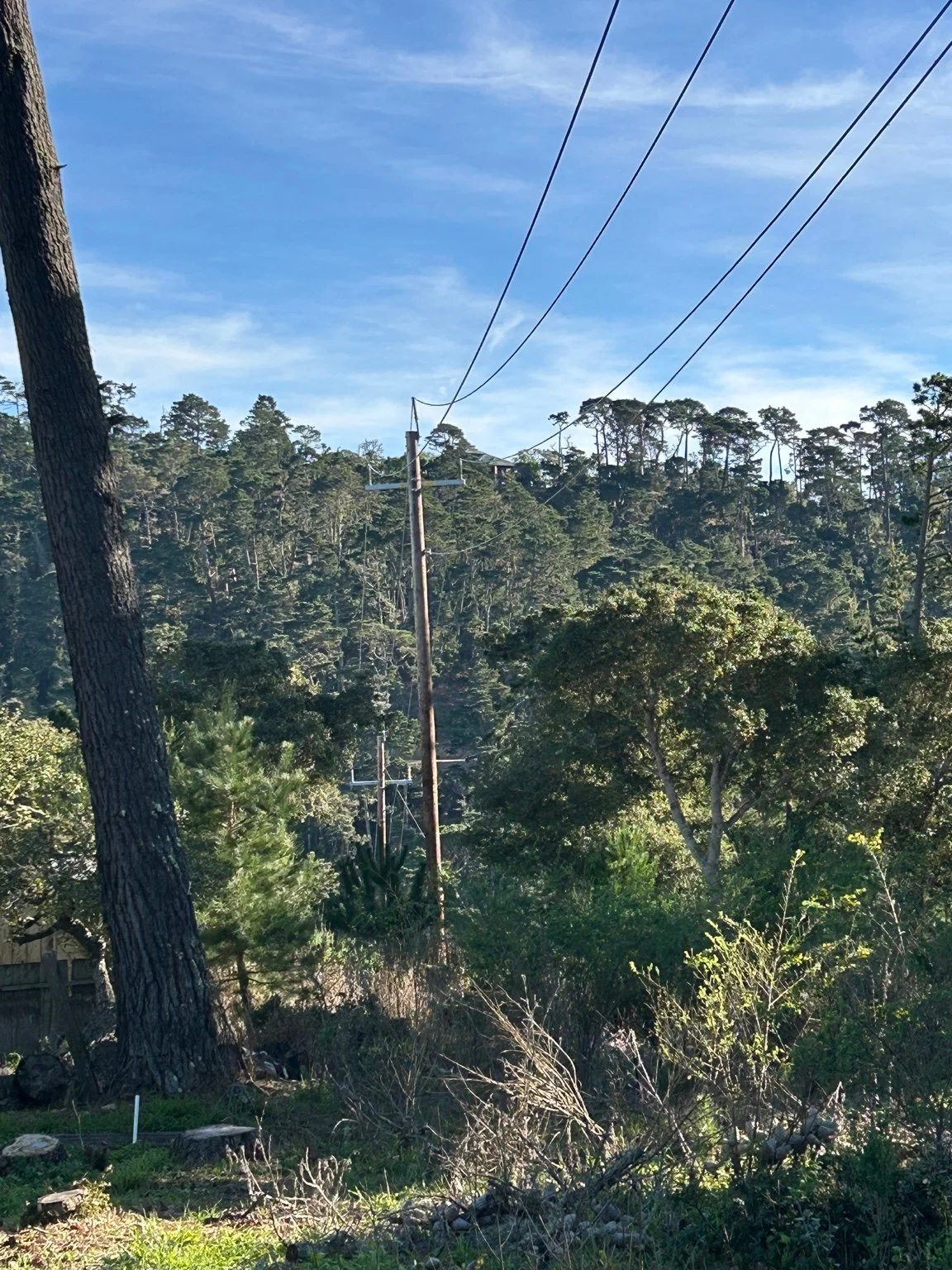
The overhead 21 kV feeder through forest near Viejo Substation, serving Skyline. Photograph by Raymond Meyers.
February 2026: the storms again
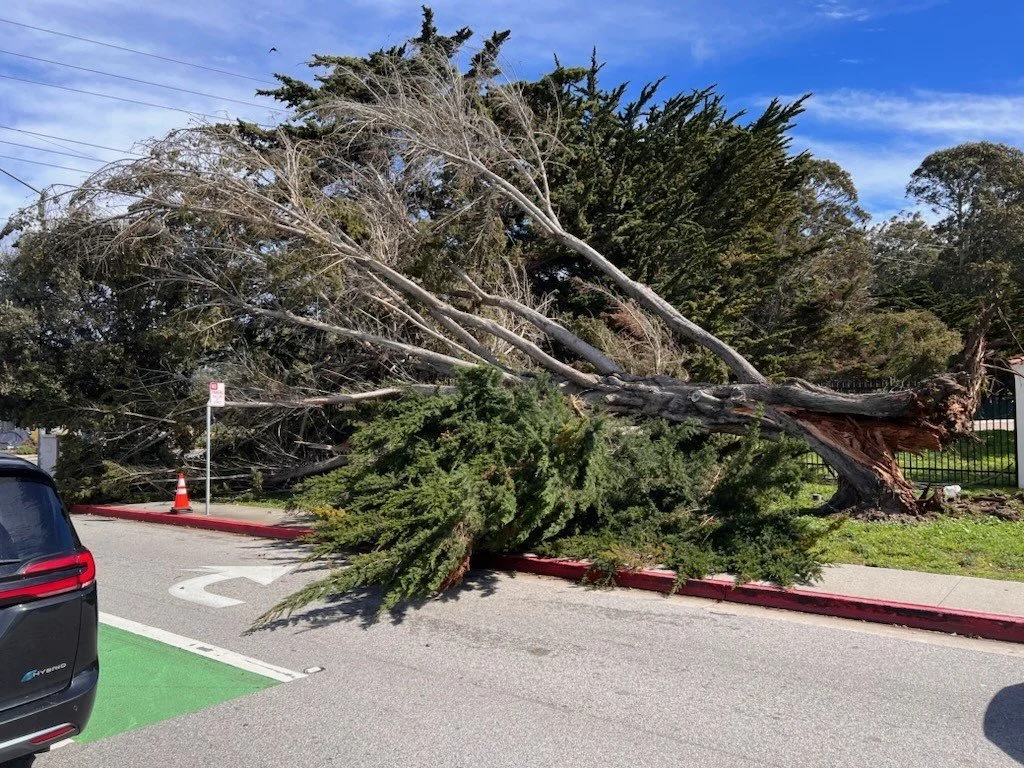
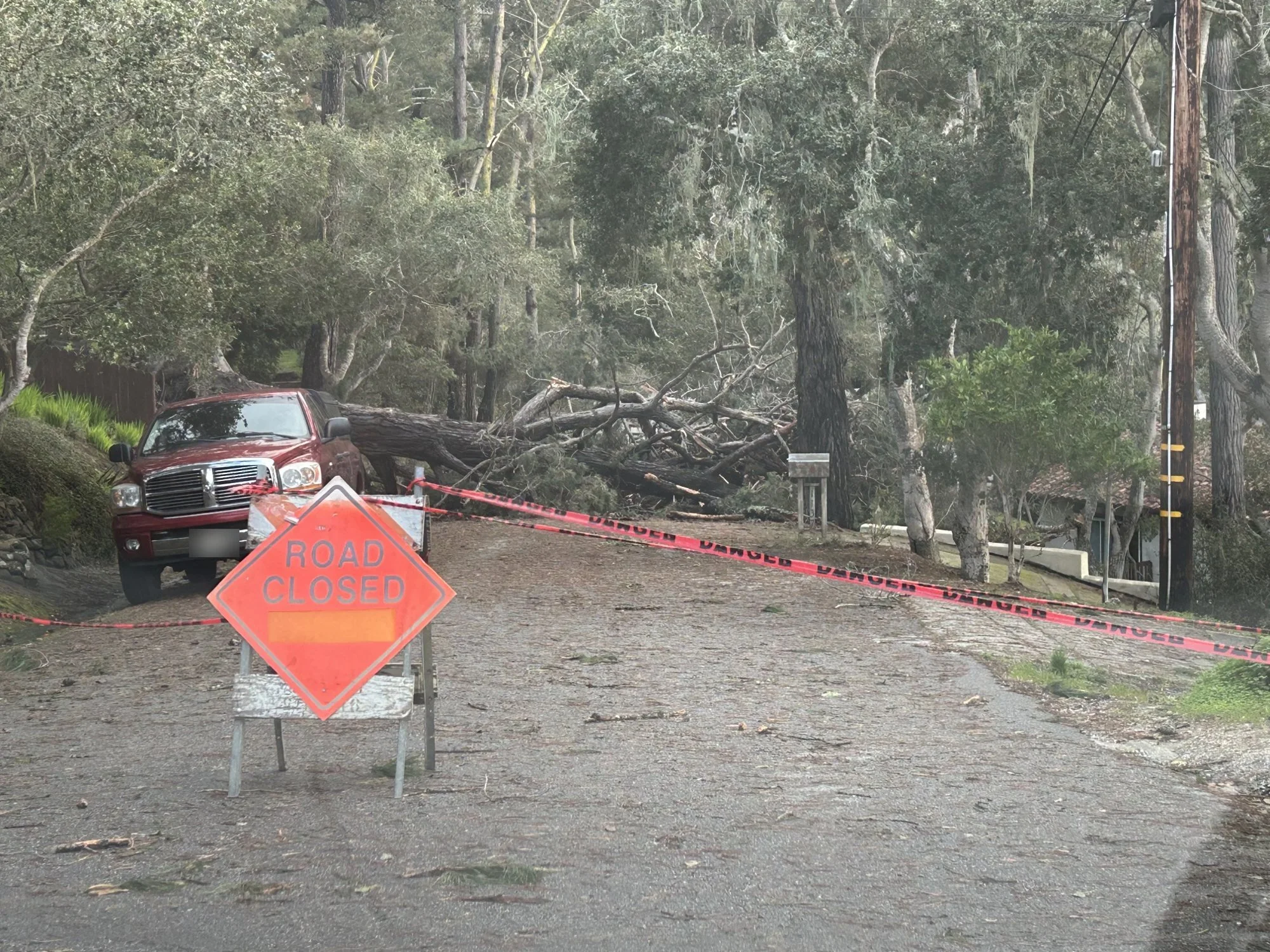
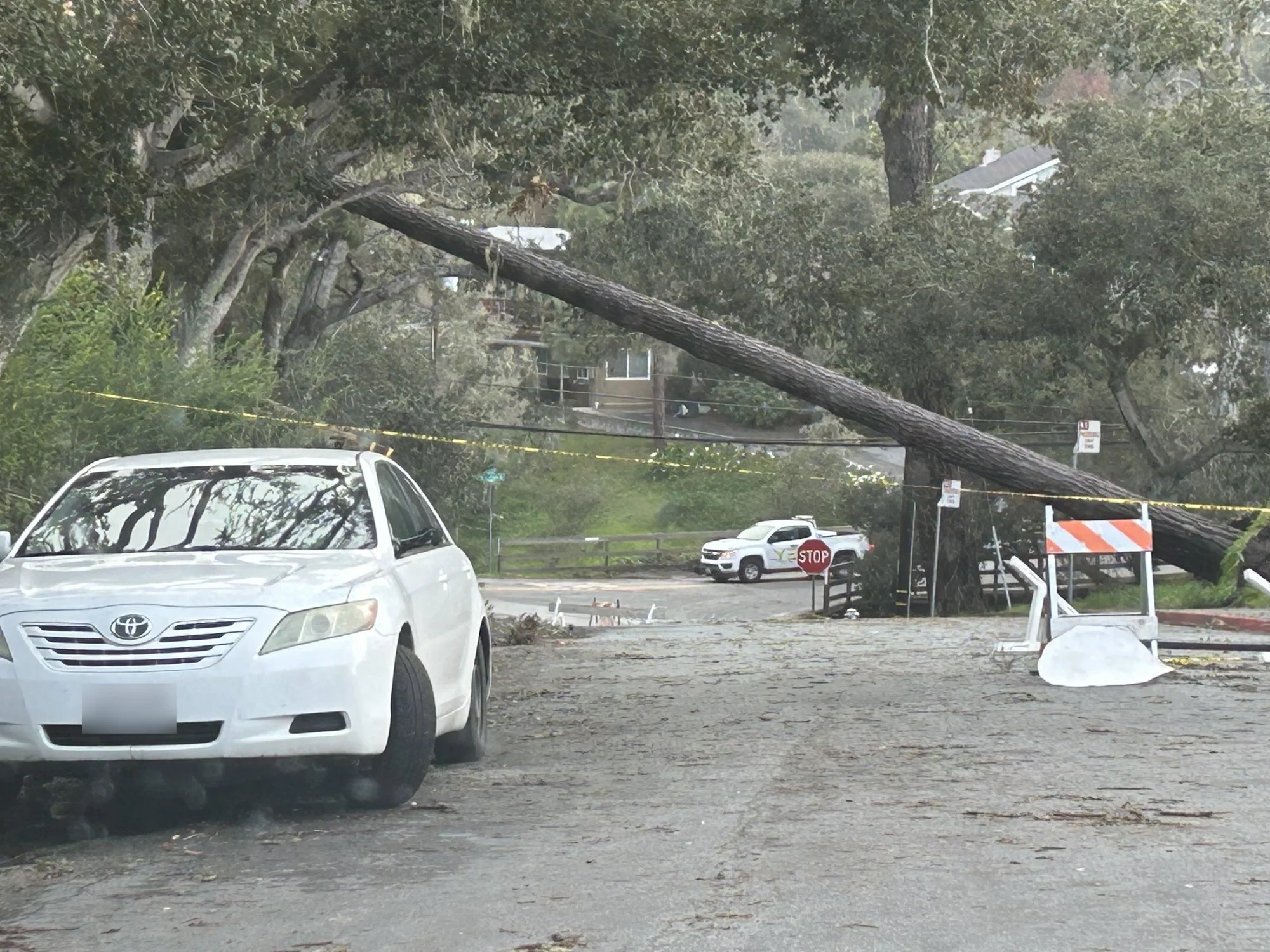
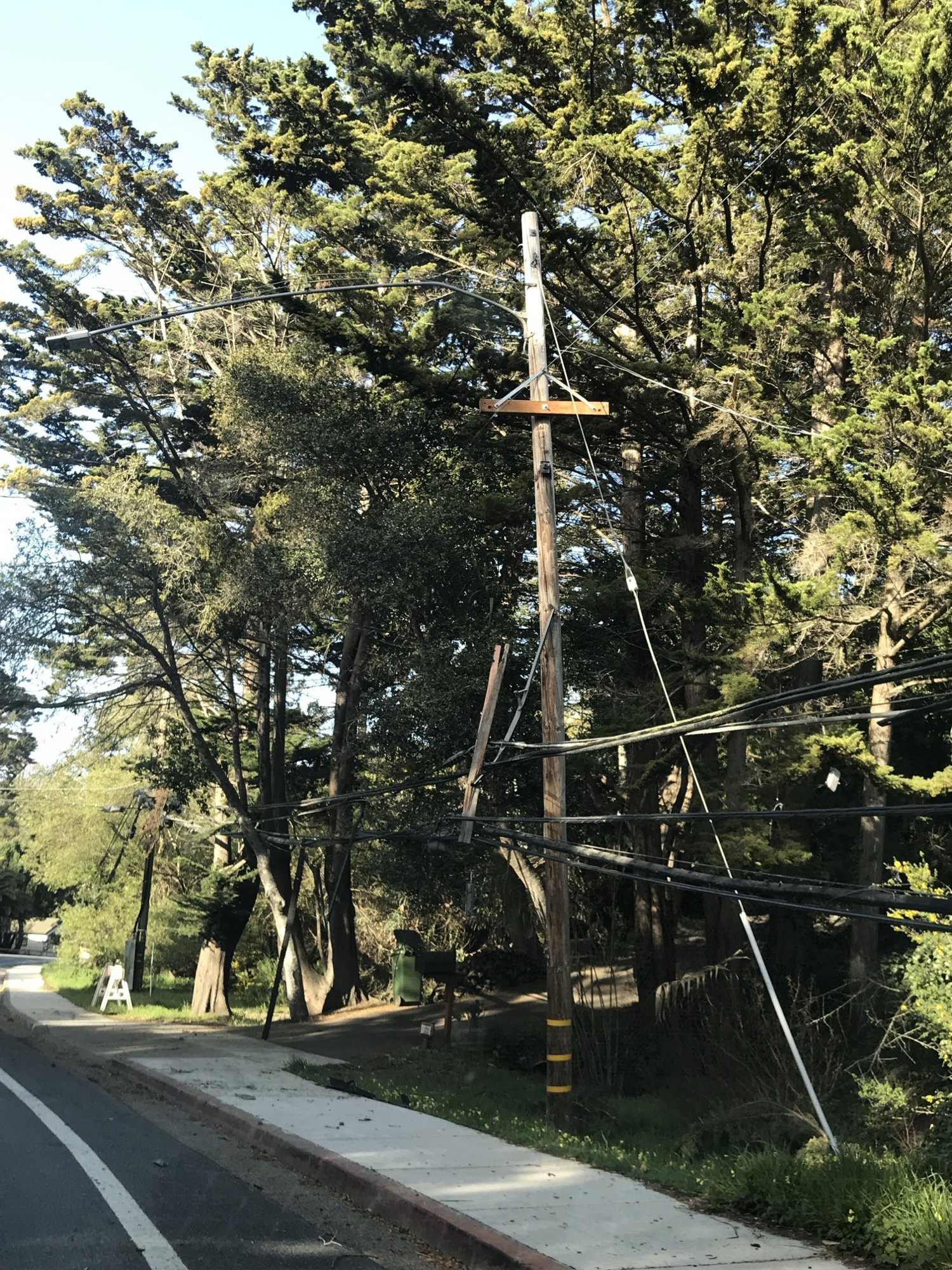
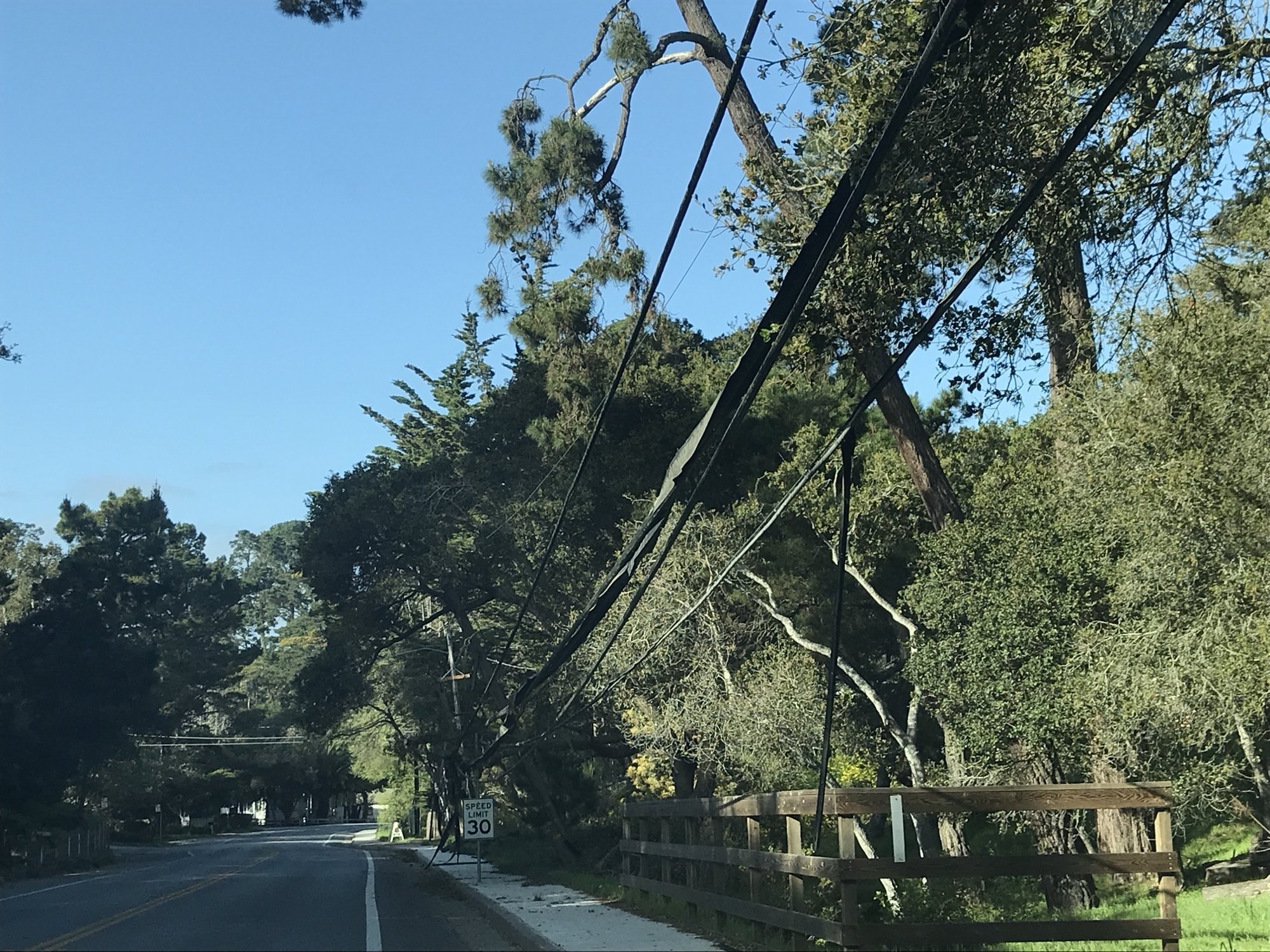
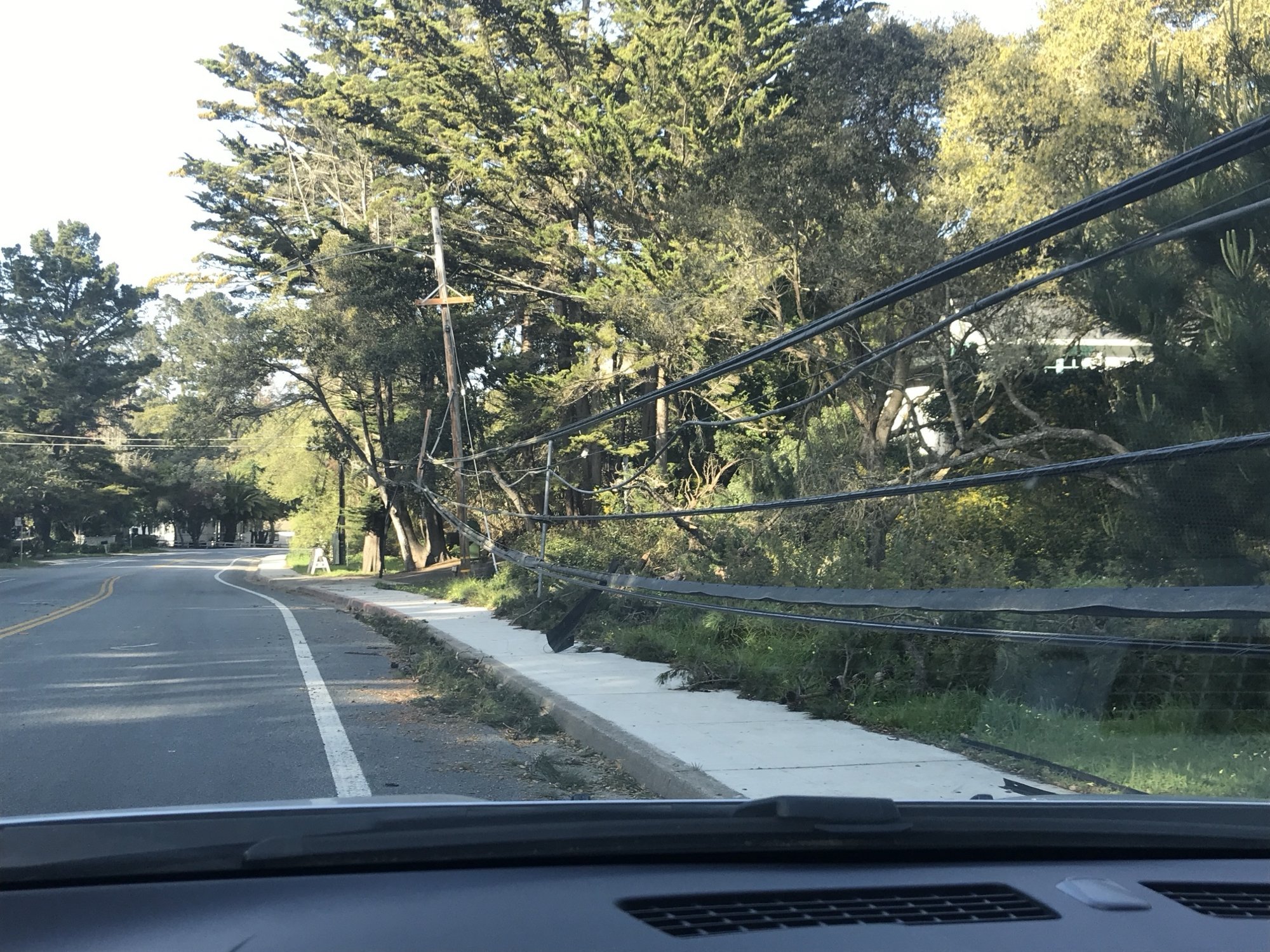
Storms in February 2026 brought down trees and lines across Monterey and showed the same pattern. Neighborhood streets such as San Bernabe Drive and Arboles Street suffered storm damage, and crews were out repairing poles and wires, including in the commercial district near the airport.
The outages reached businesses as well as homes. A Target store had to empty its freezer aisles and throw away its frozen food after losing power. Comcast brought in a generator trailer to keep part of its cable network running. For many people the damage was not the wires themselves but everything that depends on them.
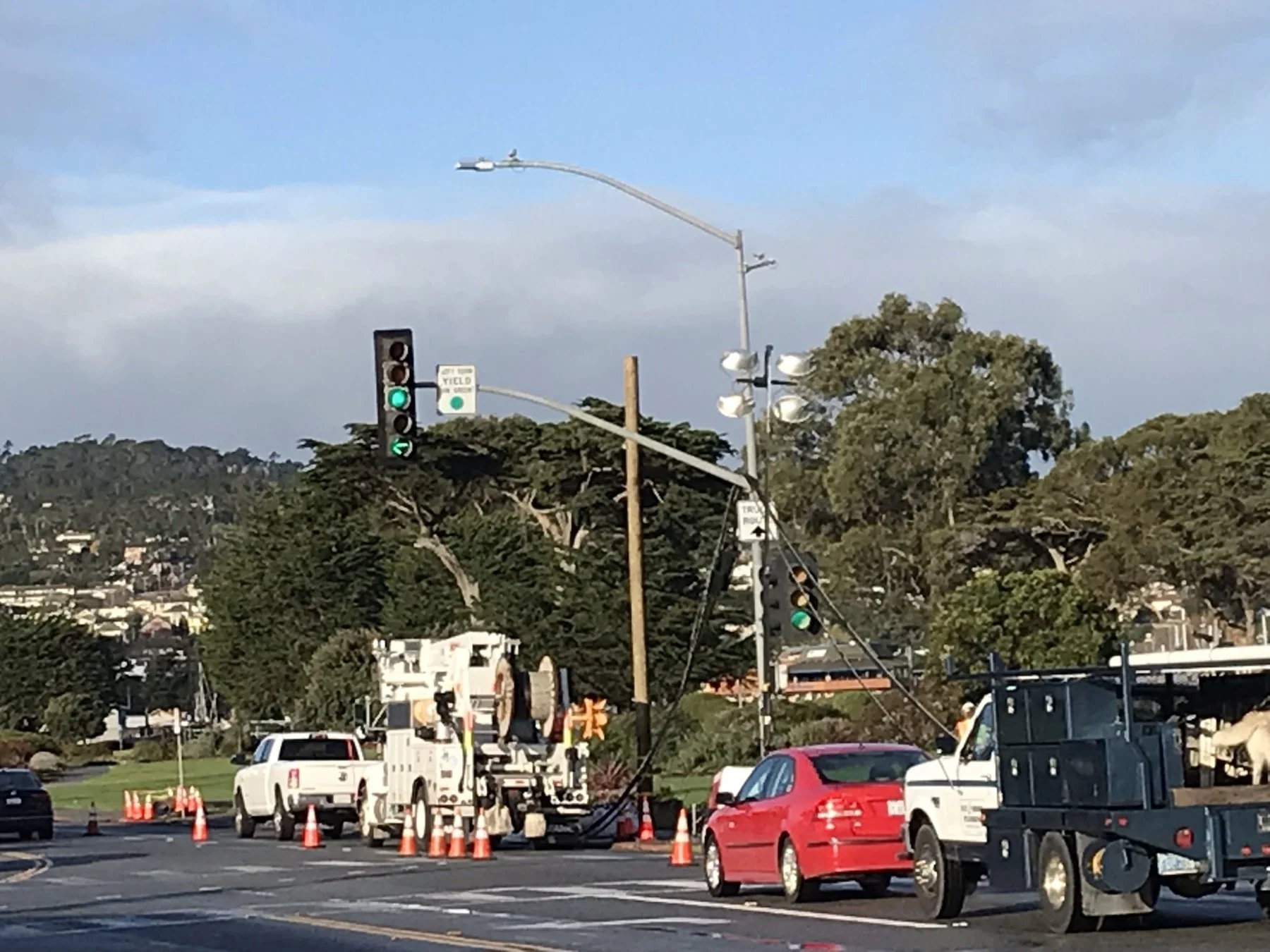
Del Monte Avenue, December 2021: crews working on a downed cable. Photograph by Raymond Meyers.
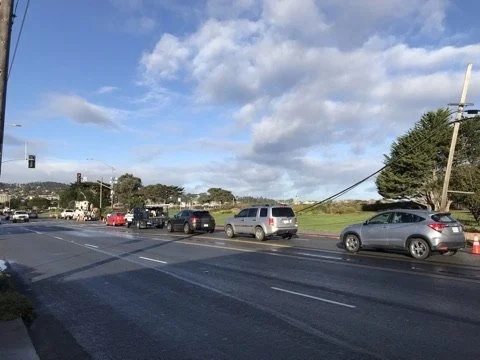
Del Monte Avenue, December 2021: an overhead line down across the roadway. Photograph by Raymond Meyers.
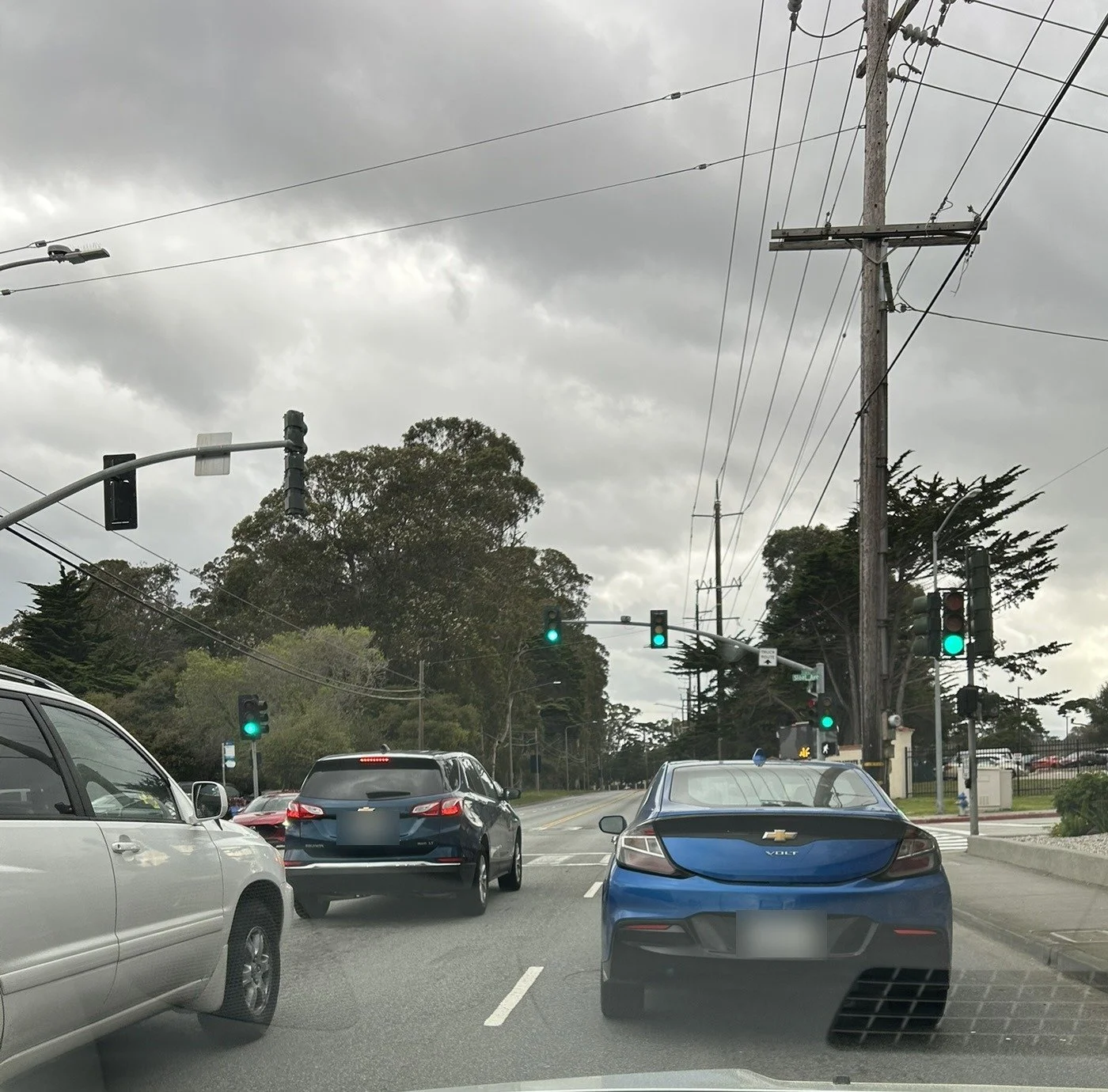
Del Monte Avenue and Park Street near the Naval Postgraduate School, where a falling tree took out the two 60 kV lines. Photograph by Raymond Meyers.
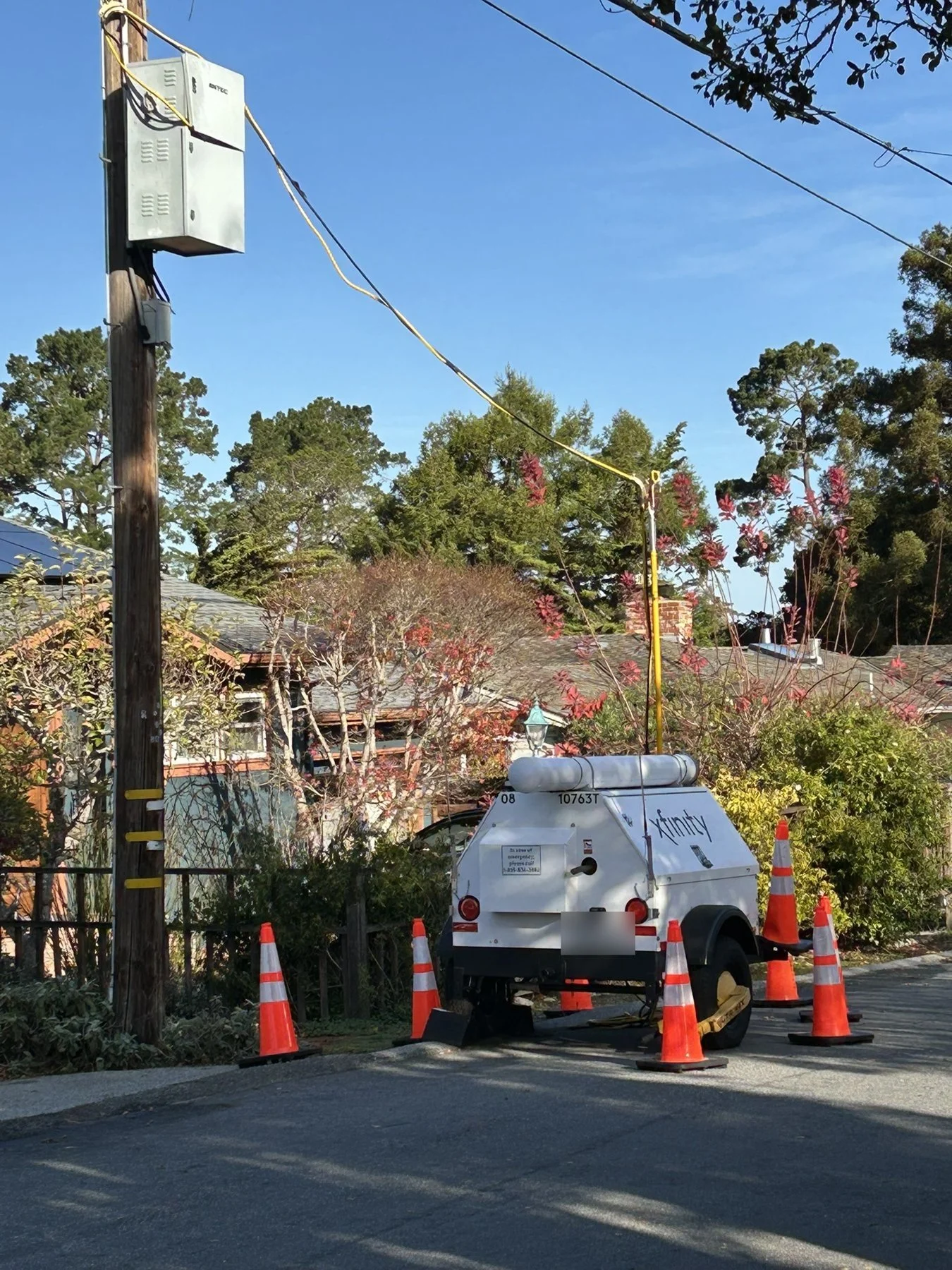
A Comcast generator trailer set up beside a utility pole to keep the cable network running during the February 2026 outages. Photograph by Raymond Meyers.
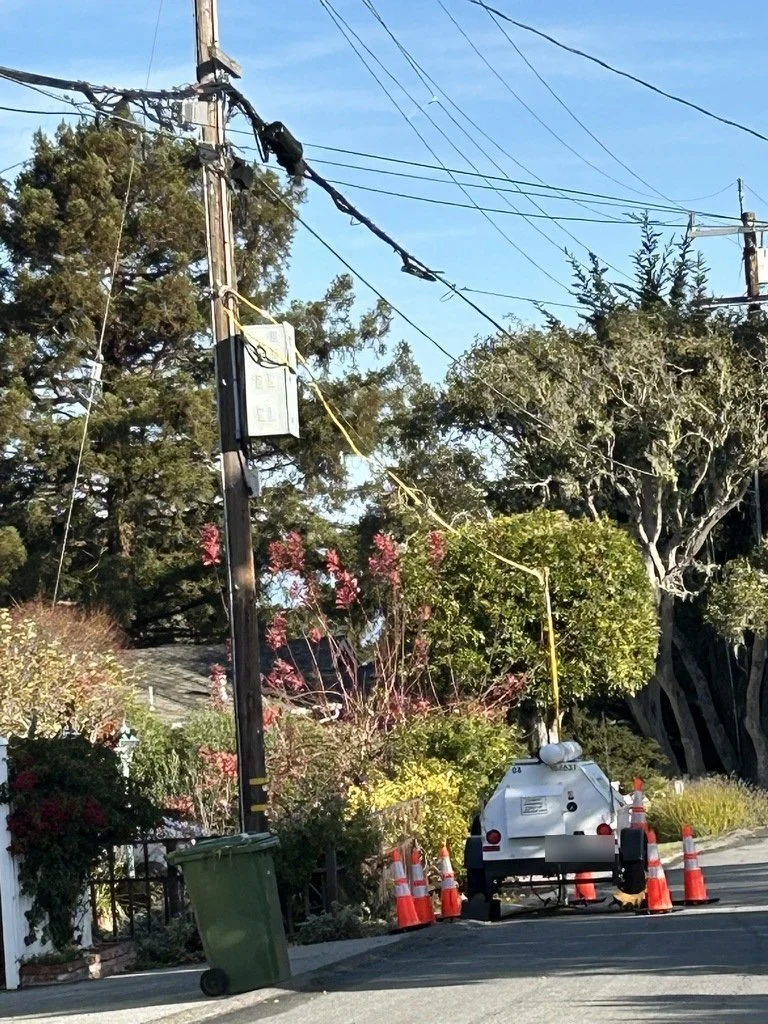
The same Comcast generator trailer from another angle. Photograph by Raymond Meyers.
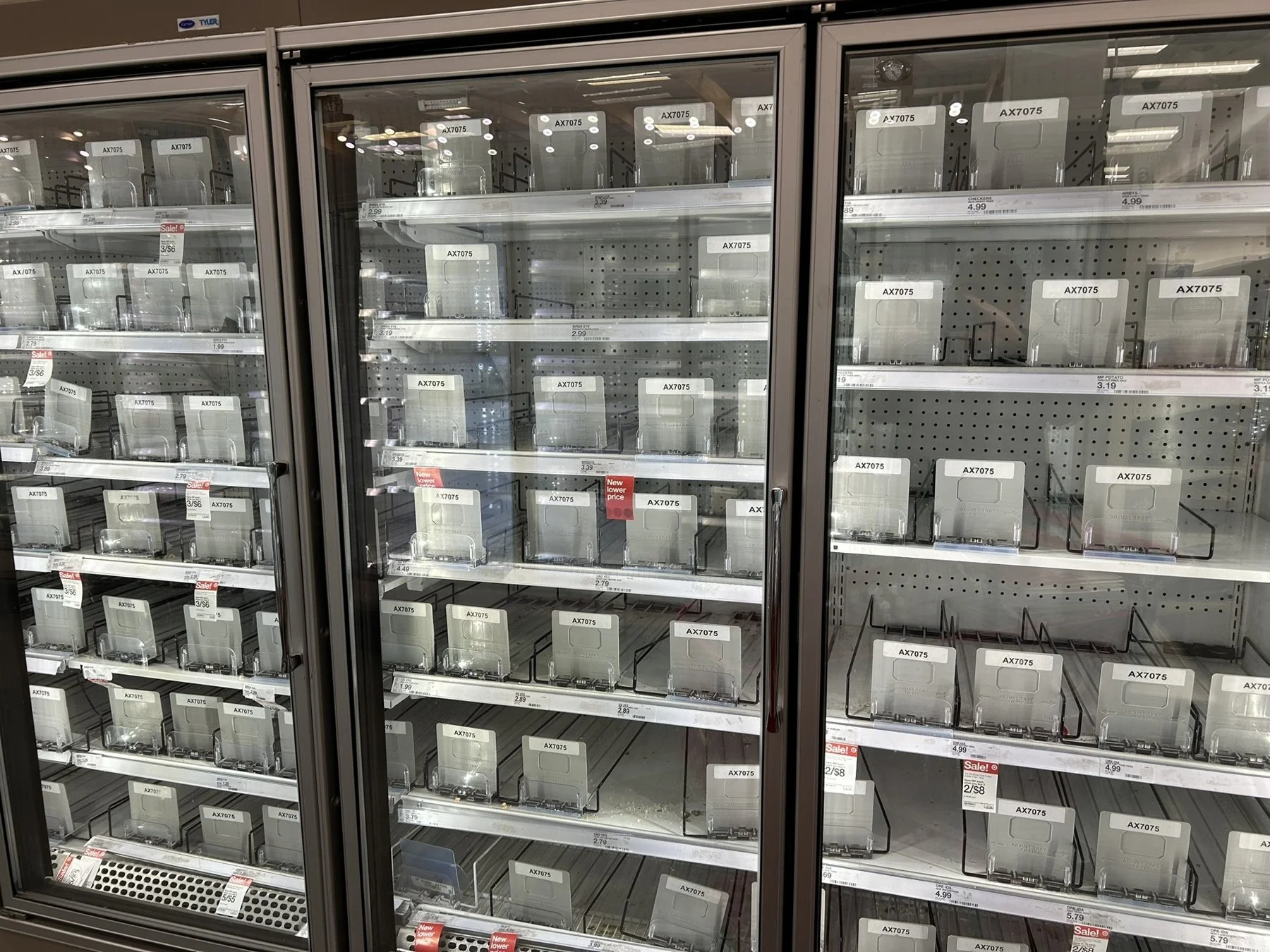
Empty frozen-food cases at Target after the February 2026 power outages. The store had to throw away all of its frozen stock. Photograph by Raymond Meyers.
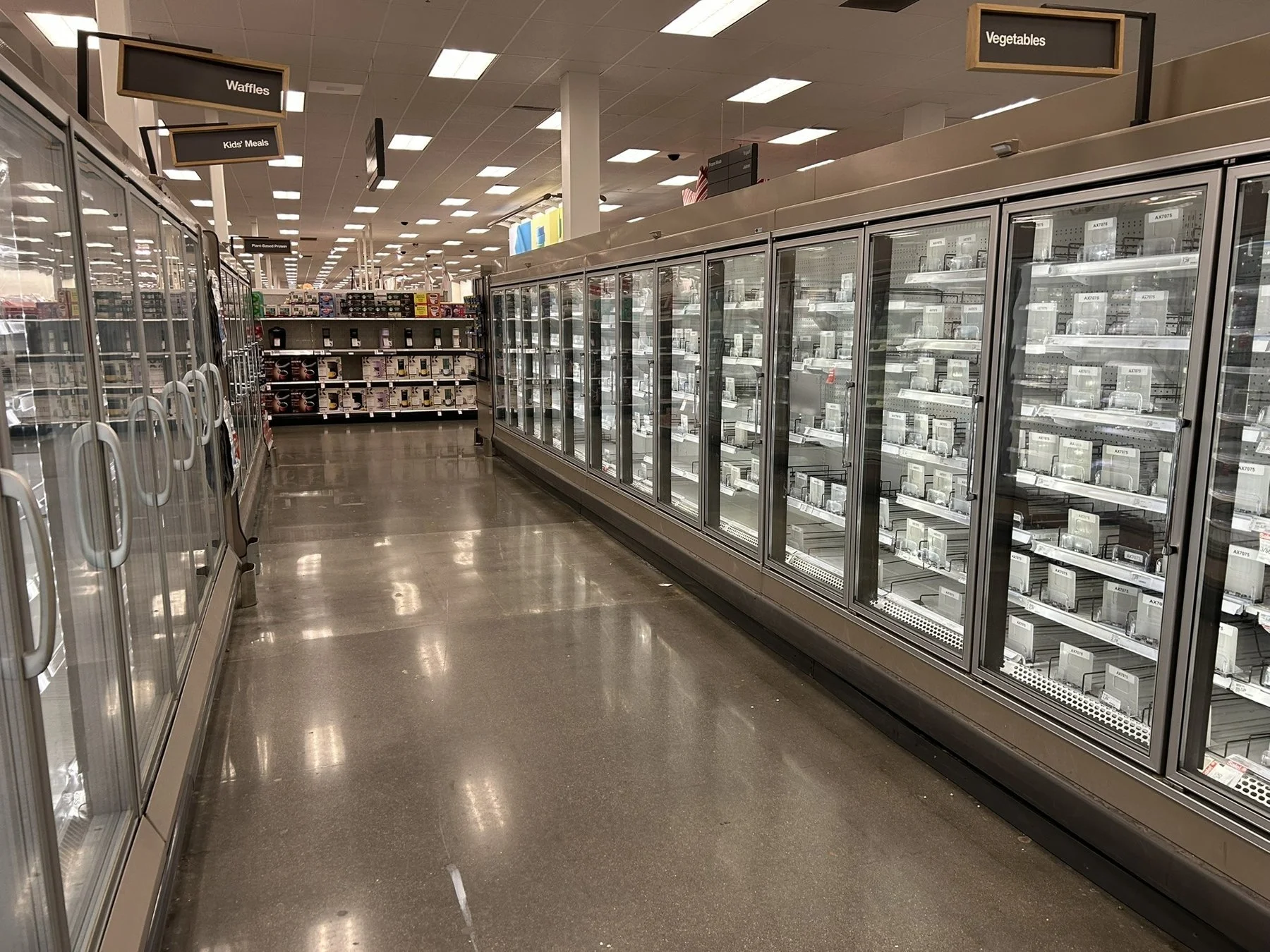
The frozen-food aisle at Target, emptied after the outages, February 2026. Photograph by Raymond Meyers.
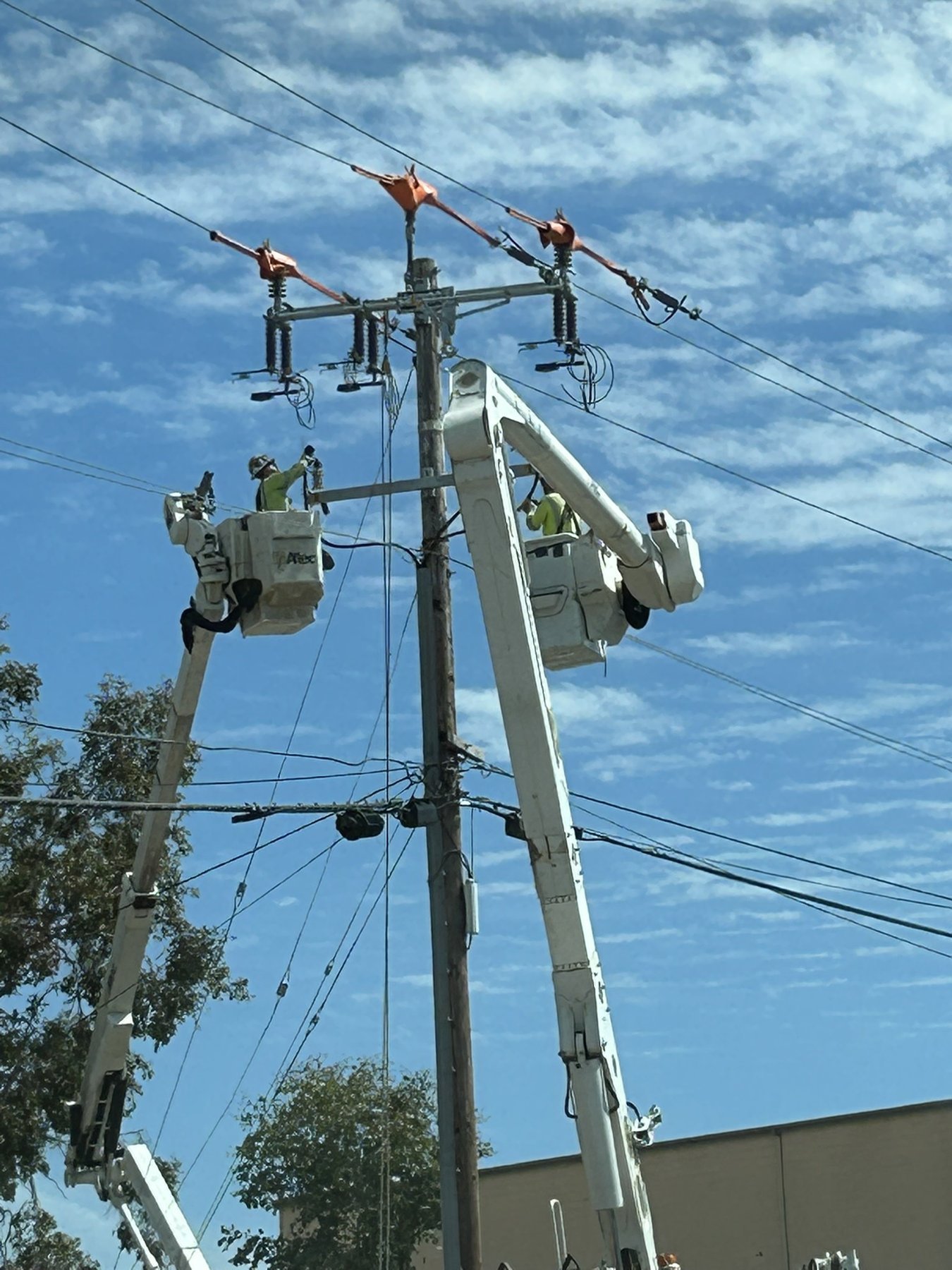
Crews repairing a pole in the commercial district near the airport after the February 2026 storms. Photograph by Raymond Meyers.
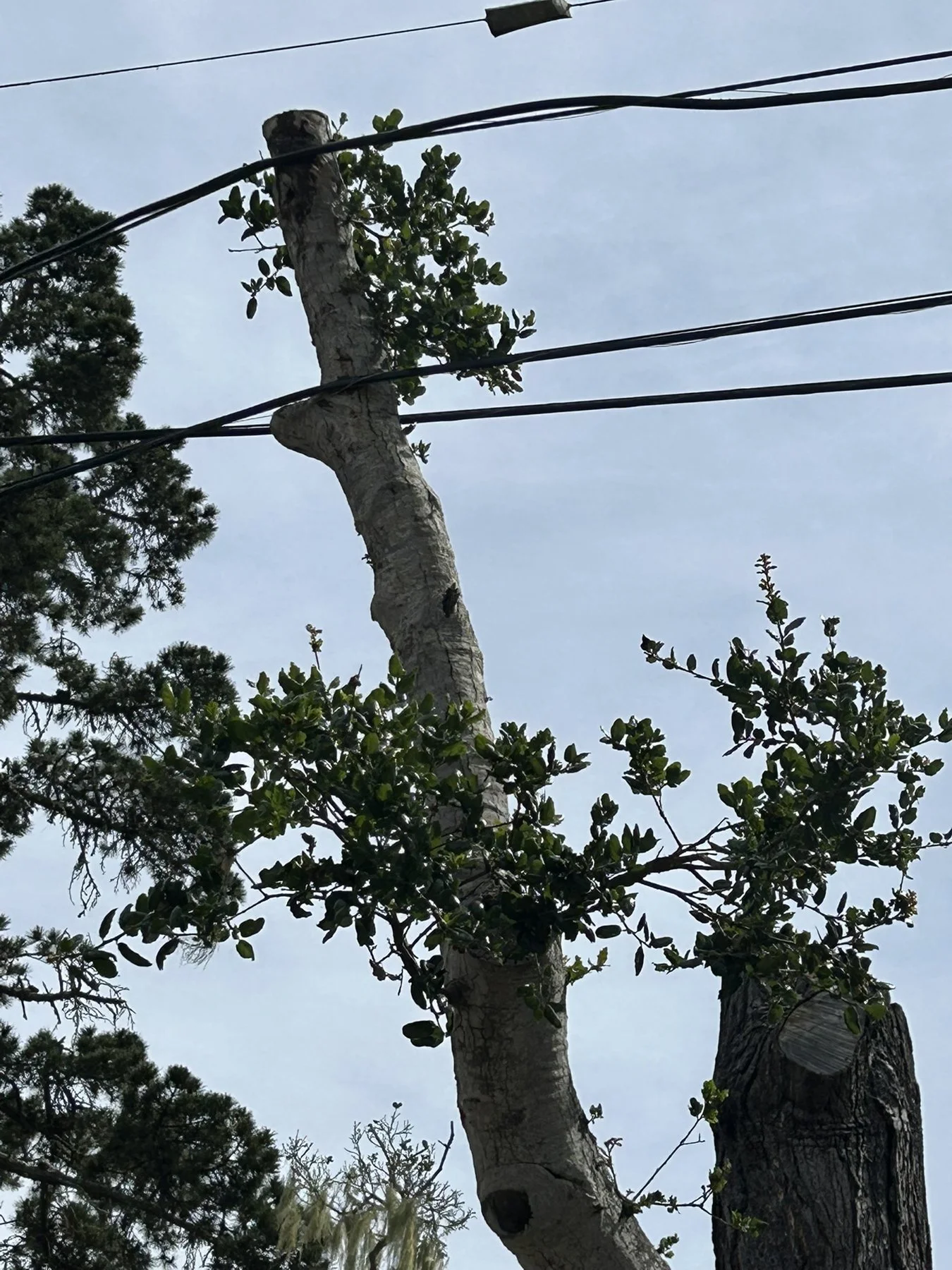
Arboles Street, February 2026: a storm-damaged tree against the overhead lines. Photograph by Raymond Meyers.
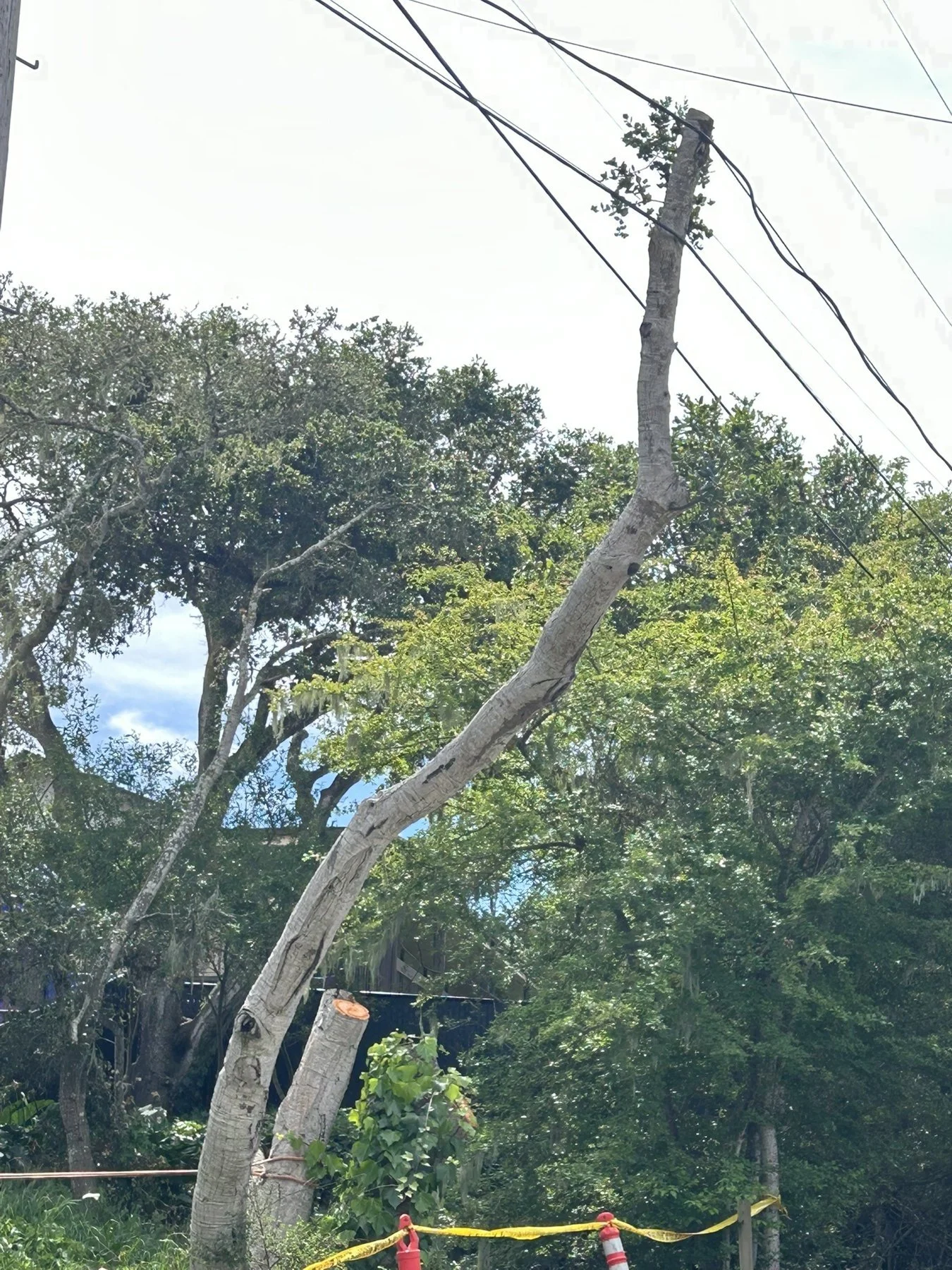
Arboles Street, February 2026: storm damage to a tree beside the lines. Photograph by Raymond Meyers.
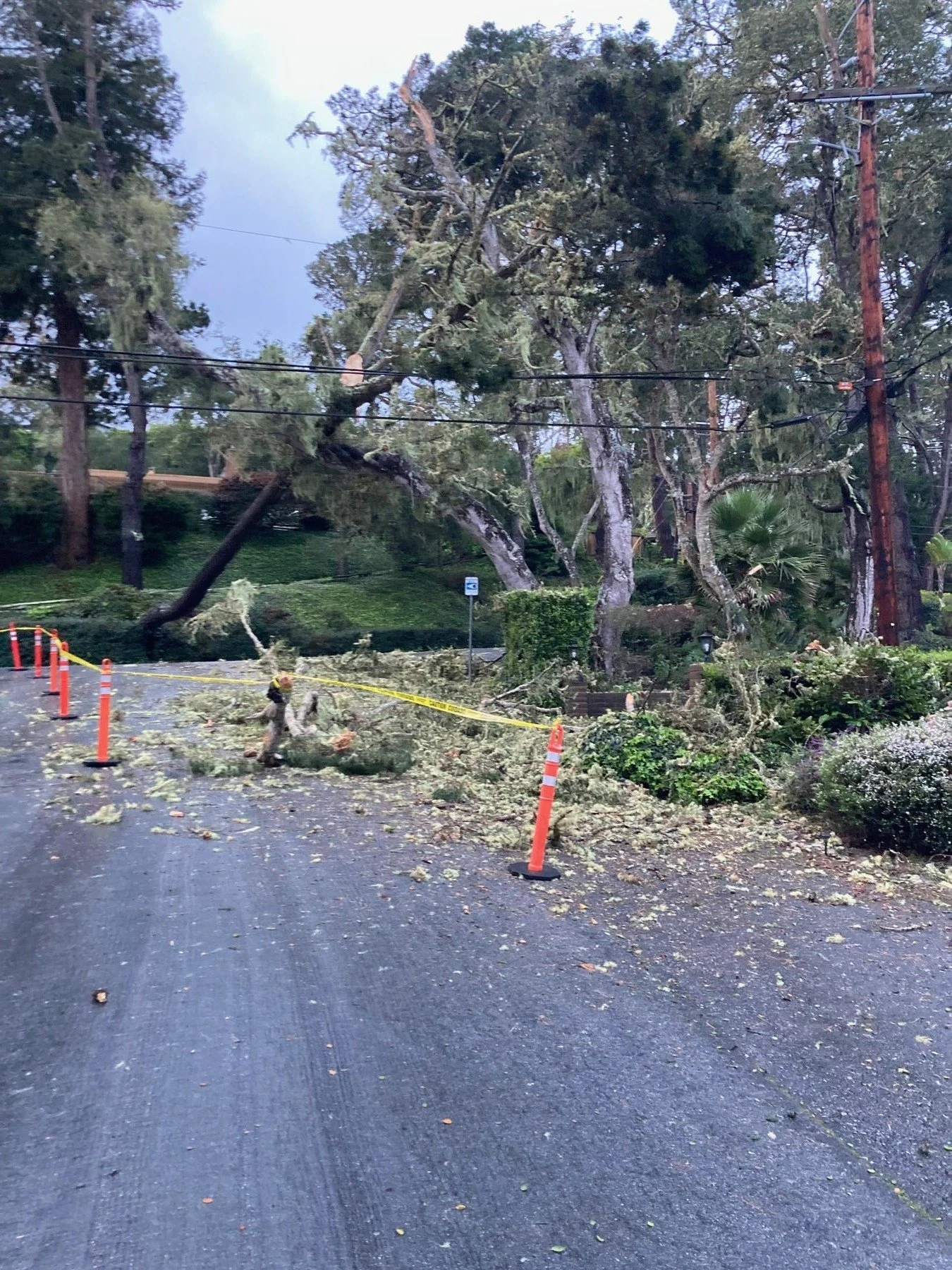
San Bernabe Drive, February 2026: storm damage. Photograph by Raymond Meyers.
Trees and the lines they share
Many outages begin when a tree meets a line. These photos show storm-felled and towering trees beside Monterey's overhead lines, including the corner near the Naval Postgraduate School, where one fall can take out a 60 kV line that serves several cities at once.