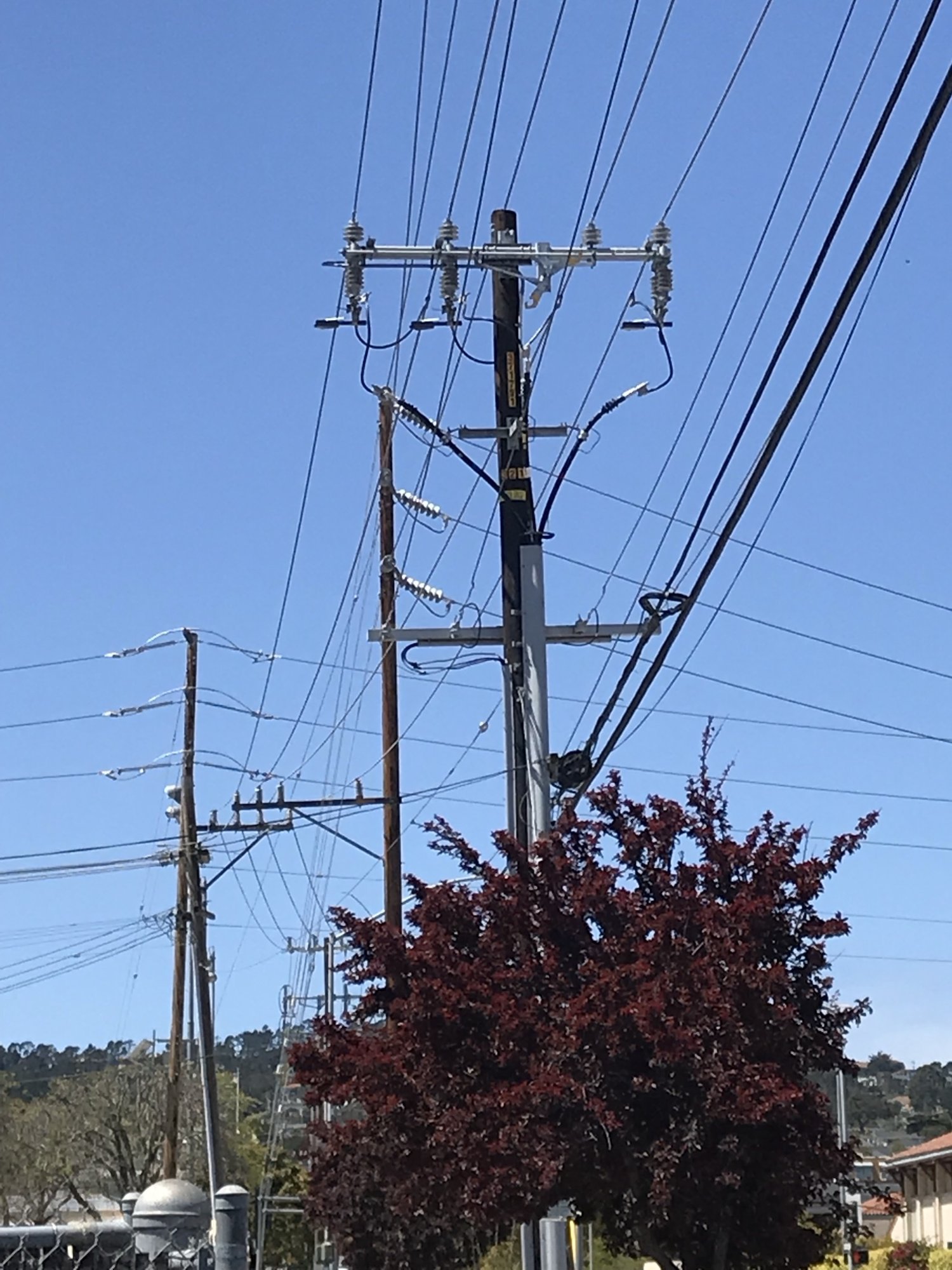
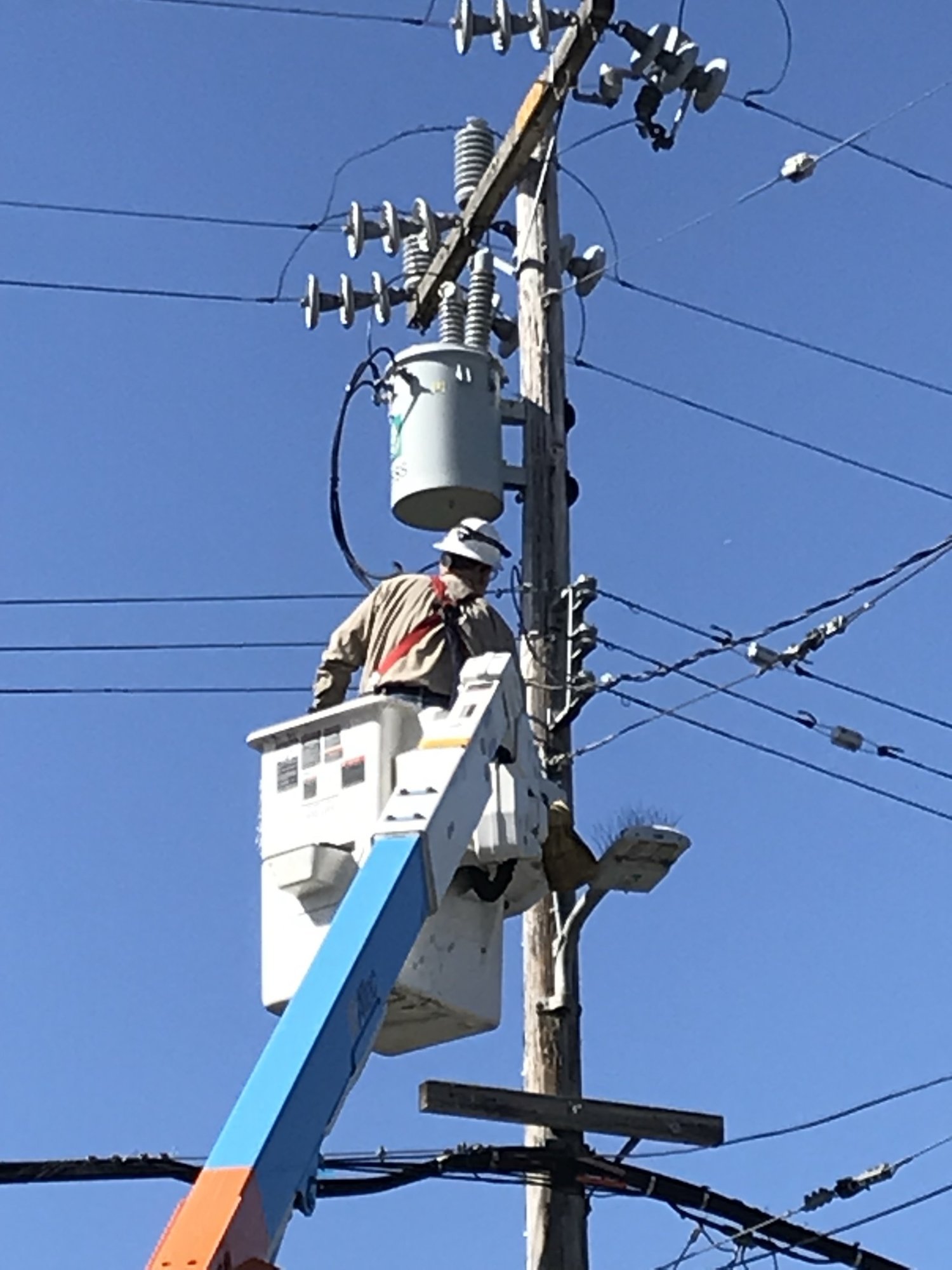
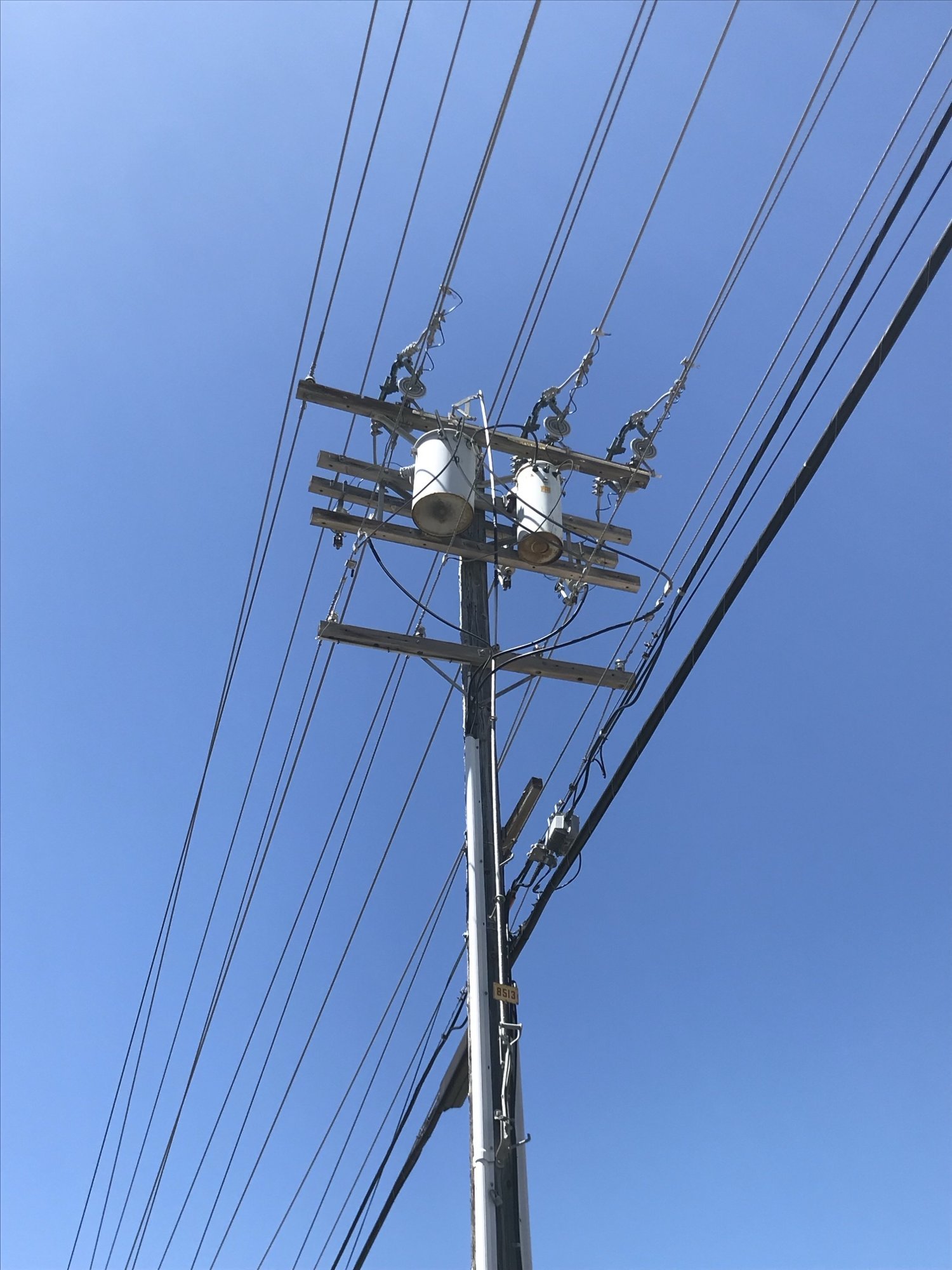
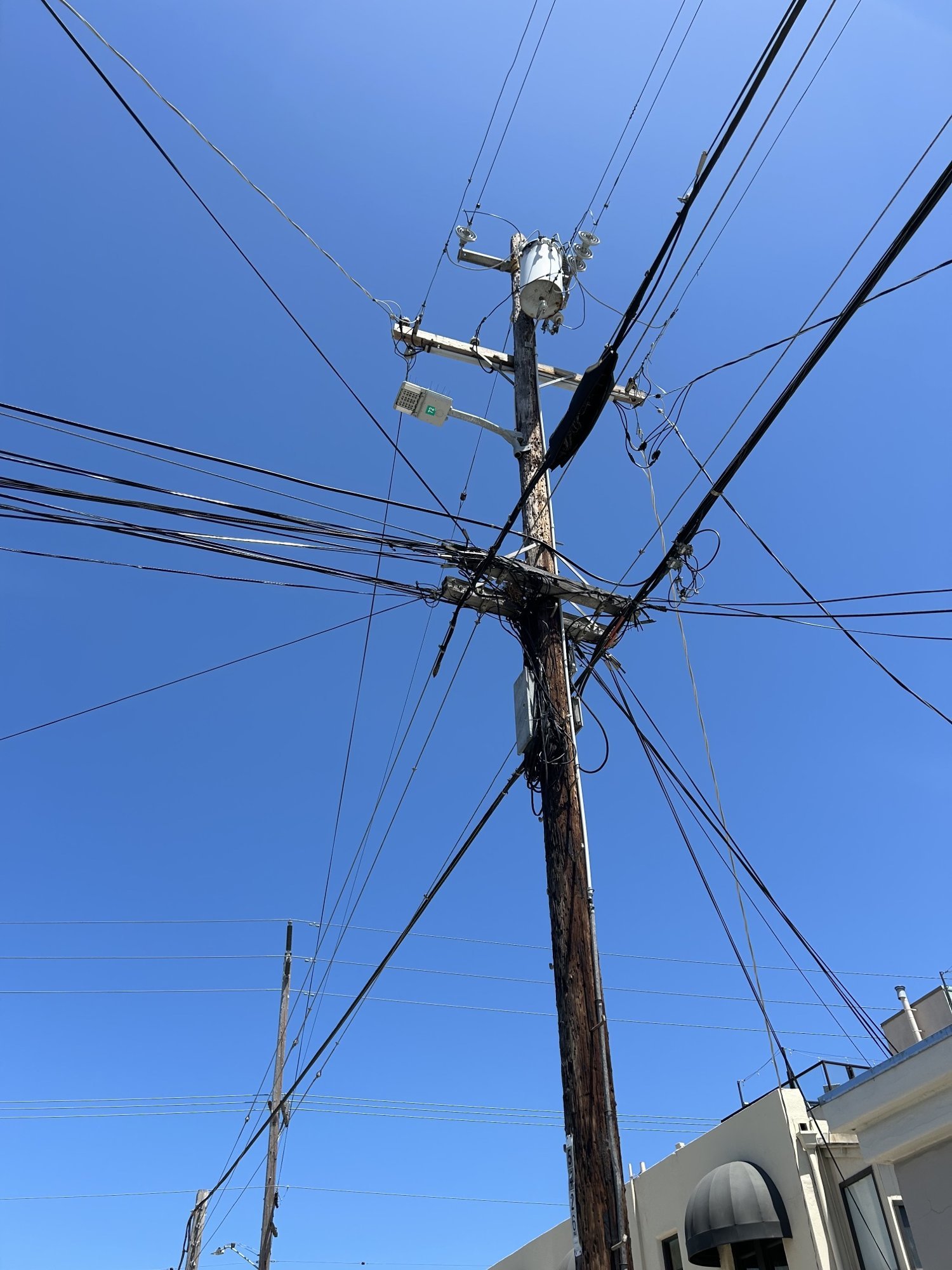
Keeping the wires overhead has a price too.
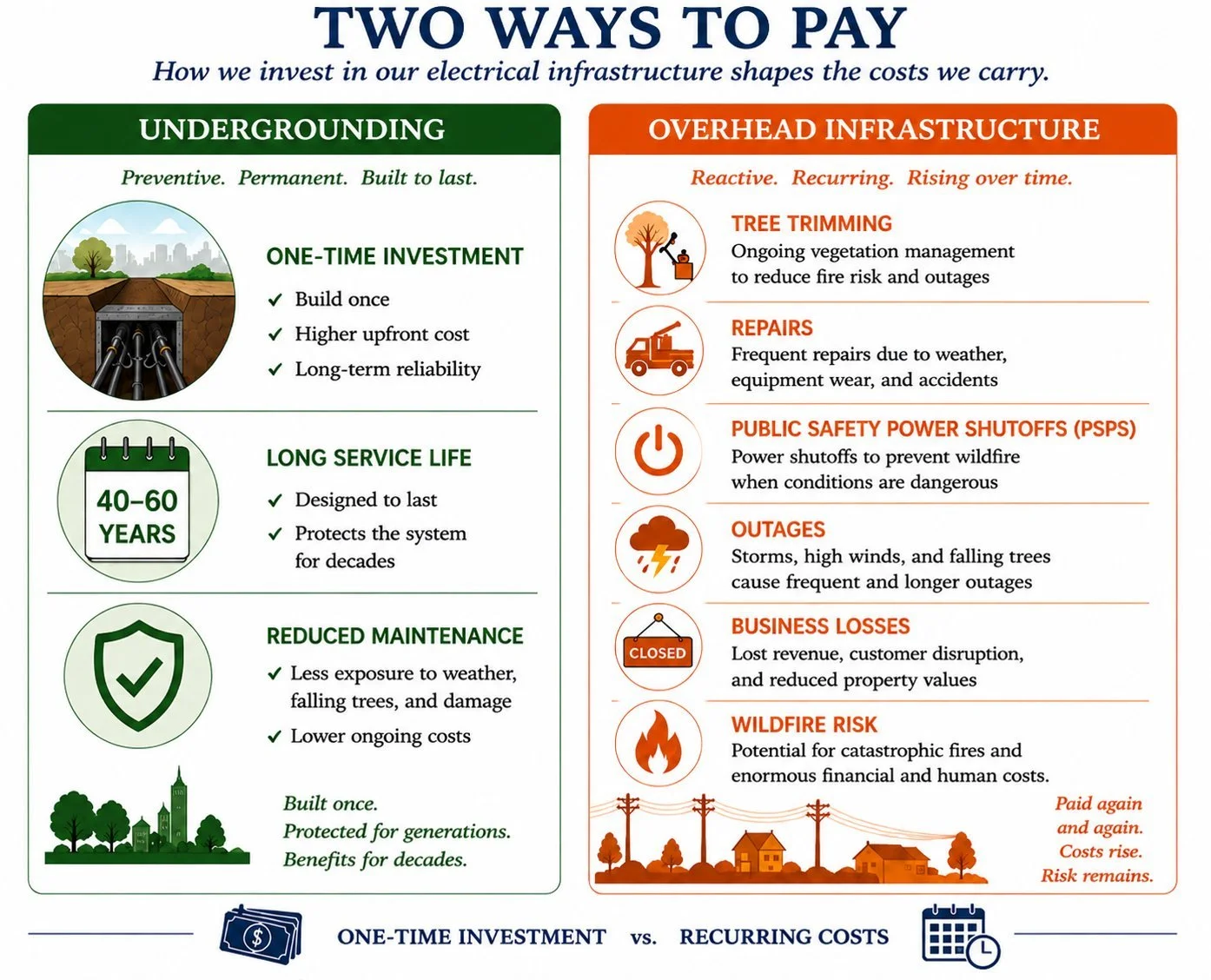
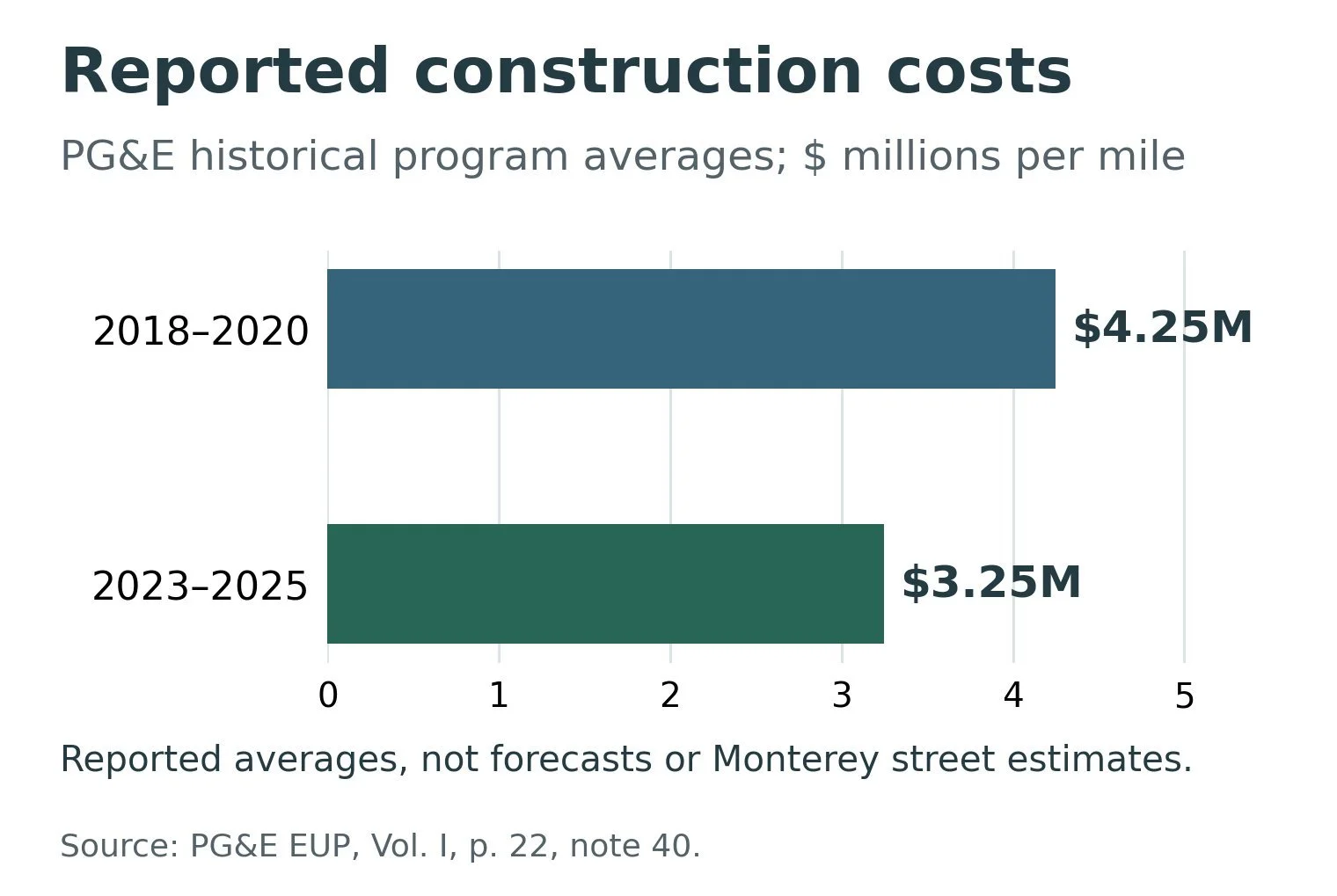
Undergrounding is expensive. The figure most often quoted is roughly $3 million per mile on average. But keeping lines overhead is not free. Its costs arrive quietly, in small amounts, until the year they arrive all at once.
Two ways to pay
A fair comparison looks at both over the same lifetime: construction, financing, maintenance, outages, and the risk left over. The graphic at the end of this page lays out the two paths.
What overhead lines cost us
Catastrophic fire. The 2018 Camp Fire, sparked by aging transmission equipment, killed 85 people and destroyed nearly 14,000 homes.
Tree work without end. In 2021 PG&E planned to spend roughly $1.5 billion removing 300,000 trees and trimming more than a million others.
Safety shutoffs and outages. Every shutoff and storm outage costs households and businesses money that never shows up in a per-mile price. Stanford researcher Michael Wara estimated that a single month of California shutoffs in October 2019 could have cost about $2.5 billion in economic losses.
Close to home
The March 2023 Del Monte Avenue outage was an economic event as well as an inconvenience. The Peninsula runs on hotels, restaurants, and shops. A lost business day is revenue that never comes back.
What the utility itself says
Announcing PG&E's undergrounding plans in July 2021, chief executive Patti Poppe said: "It's too expensive not to do it. Lives are on the line."
Two long-run comparisons
In 2019, retired UC Davis professor Robert Johnston estimated that, over thirty years, continuing conventional fire prevention on California's rural lines would cost utilities about $174 billion, against about $87 billion to underground them. It is one expert's estimate, not a peer-reviewed study.
PG&E's September 2026 filing is more detailed. It models about $117 billion in reduced wildfire and outage risk over a 55-year asset life, measured against a hypothetical system without today's shutoffs and safety settings. Against the protections already in place, the figure is about $15.1 billion. PG&E also estimates about $6 billion in avoided tree and maintenance costs, against a construction program of about $11.4 billion in present value. These are modeled estimates, not savings already achieved, and they set no price for Monterey.
Fair questions, honest answers
Is it the cheapest fix everywhere? No. That is why it should be aimed at the highest-risk, highest-benefit corridors.
Aren't underground faults harder to repair? Yes. A fault takes longer to find and fix. But underground lines fail far less often, so total disruption can still be much lower.
What about the construction mess? Trenching disrupts streets, sometimes for weeks. It happens once. Outages, emergency repairs, and shutoffs keep coming for as long as the lines stay overhead.
Who pays? That depends on how a project is funded, and fairness has to be designed in. See Paying for It.
The bottom line
Undergrounding should be weighed against the ongoing cost and risk of overhead lines, not against zero. For any one corridor, the answer should come from a side-by-side comparison of the options.

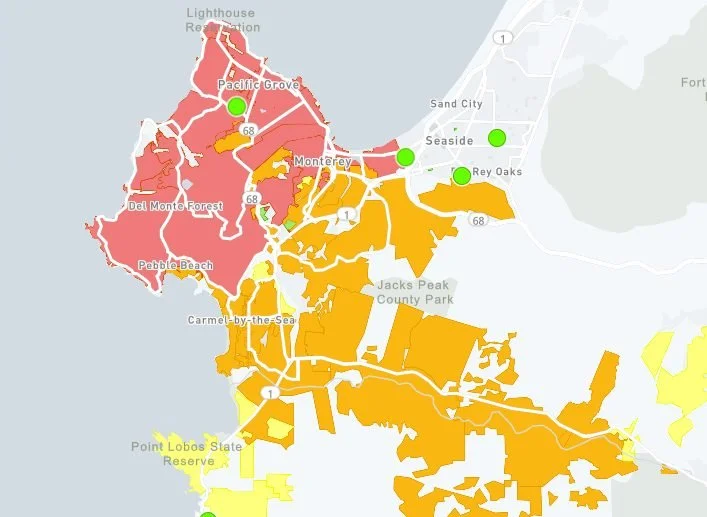
PG&E outage map during the March 2023 storm. Green: 1–49 customers without power. Yellow: 50–499. Orange: 500–4,999. Red: over 5,000. Map courtesy PG&E, as published by Monterey County Now (Pam Marino), March 10, 2023.