Wildfire Safety
Lessons from the Morse Fire on the Monterey Peninsula
A mild, foggy climate has not spared the Monterey Peninsula from wildfire. On May 31, 1987, an illegal campfire set the dry Del Monte Forest ablaze, and within hours the Morse Fire ranked among the worst the area had ever seen. Power lines did not start it, yet it showed how quickly one fire can strain homes, utilities, and emergency crews all at once. According to United States Fire Administration Report 007, roughly 160 acres burned, 31 structures were lost (most of them homes), 18 people were hurt, and 175 to 200 residents had to leave. Damage was put at about $18 million.
The fire also showed how one emergency spreads into others. It damaged equipment belonging to three utilities: PG&E, Pacific Telephone, and Monterey Peninsula Cable TV. Cutting power for safety took out pumps in part of the water system, which lowered the pressure firefighters depend on and forced crews to truck in water. With the closest air tanker busy on a Los Padres National Forest fire, another had to be called in from Chico, hundreds of miles to the north.
The lesson is that any wildfire, whatever its cause and wherever it burns, can knock out power and communications and put pressure on water supply and evacuation. Those systems rely on one another, and fires move too fast for improvised fixes. The best protection is to strengthen them before the next fire starts.
Monterey's risk today
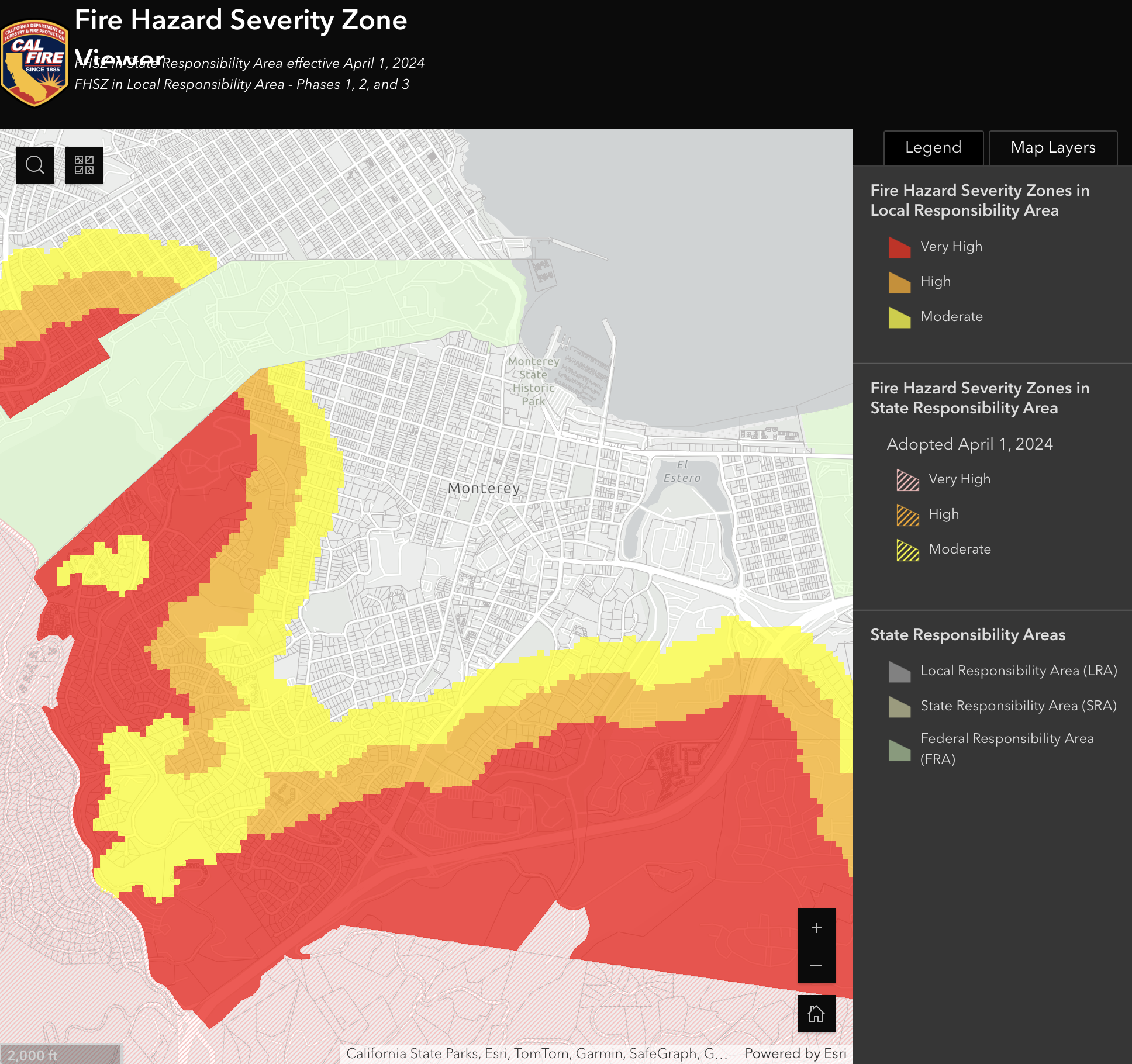
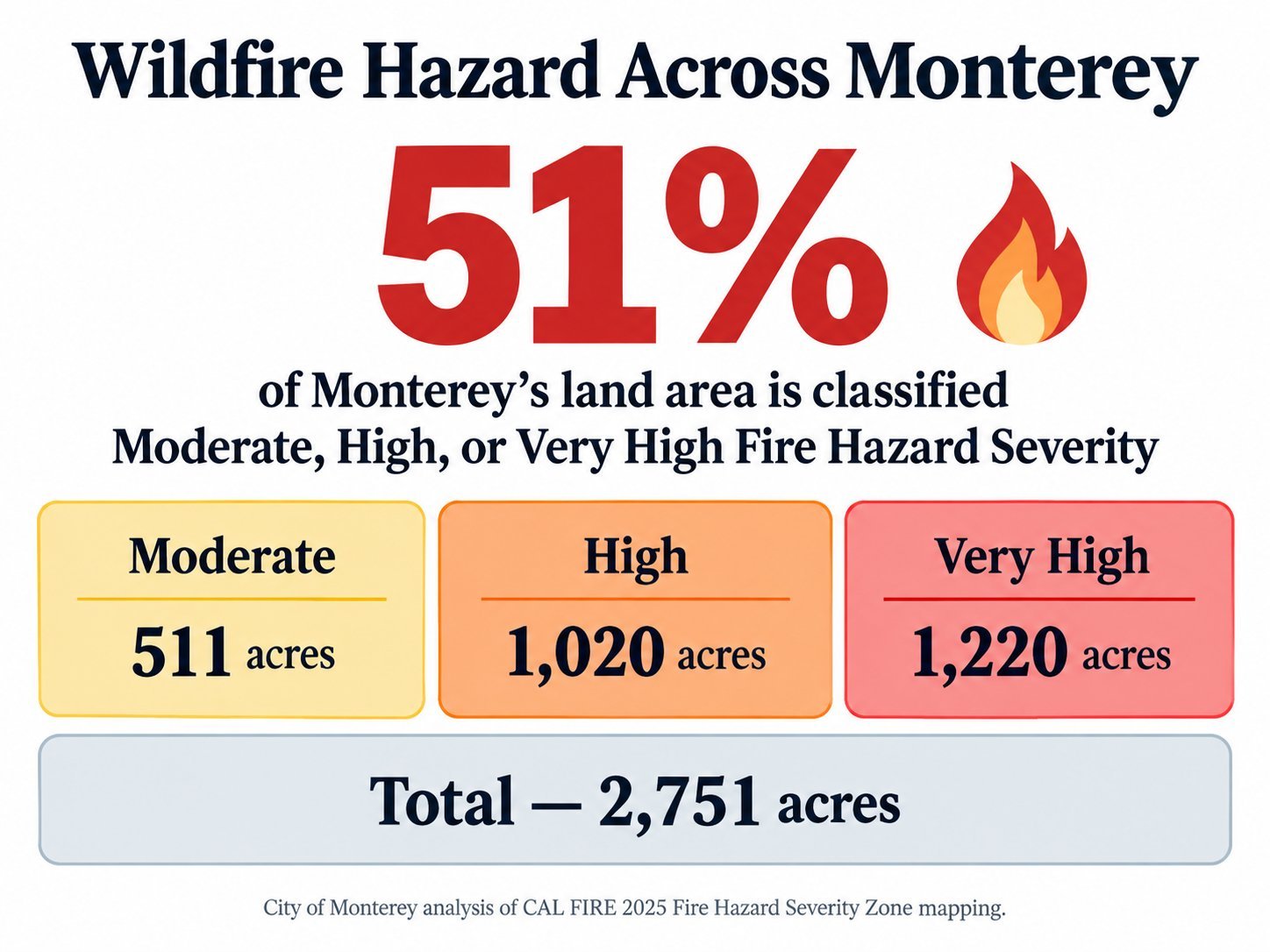
Roughly half of Monterey's land lies in CAL FIRE fire hazard zones, and the city is not alone: about 71 percent of neighboring Carmel-by-the-Sea also lies in them. In Monterey, much of the electric system still runs overhead through forested neighborhoods.
How an overhead line starts a fire
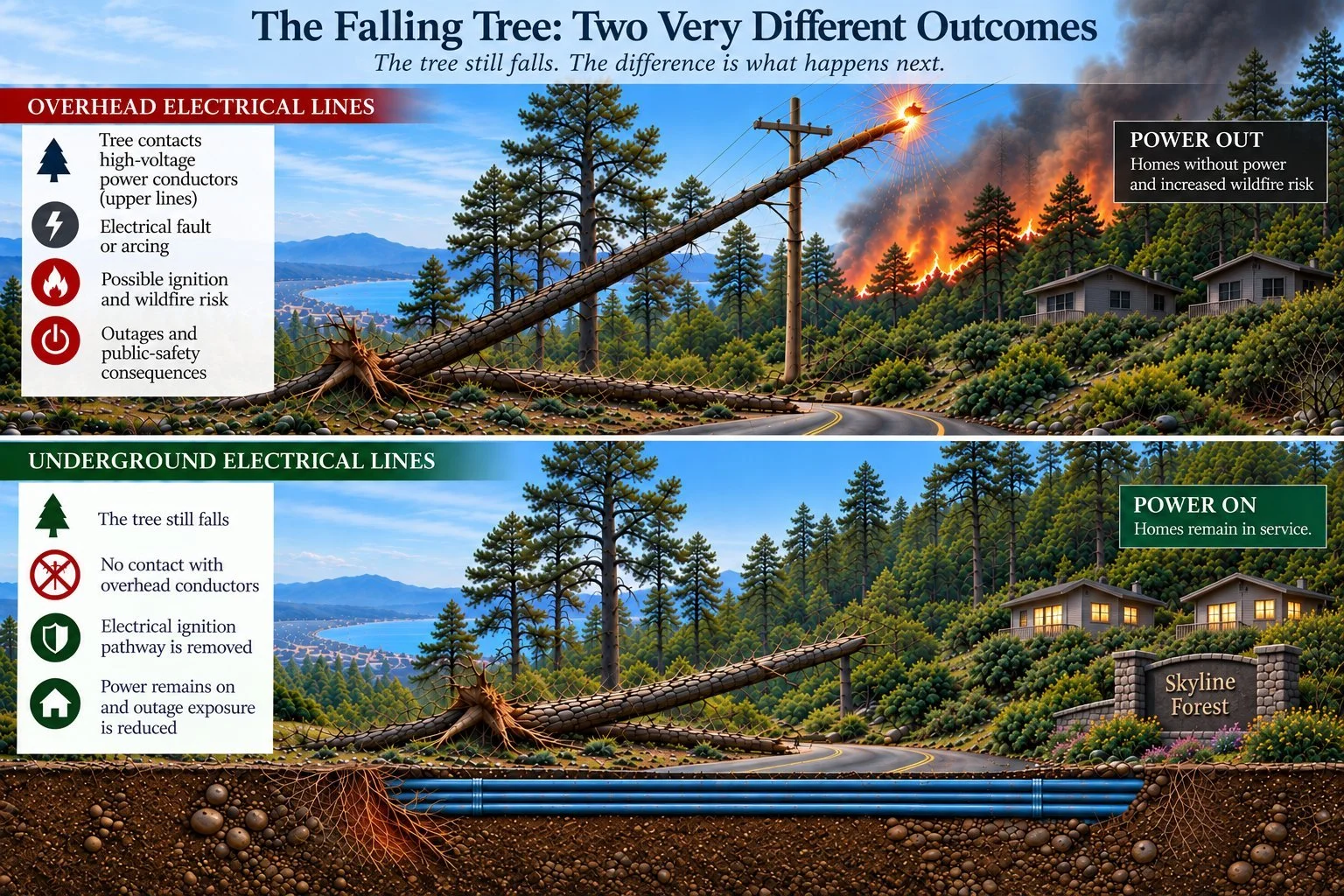
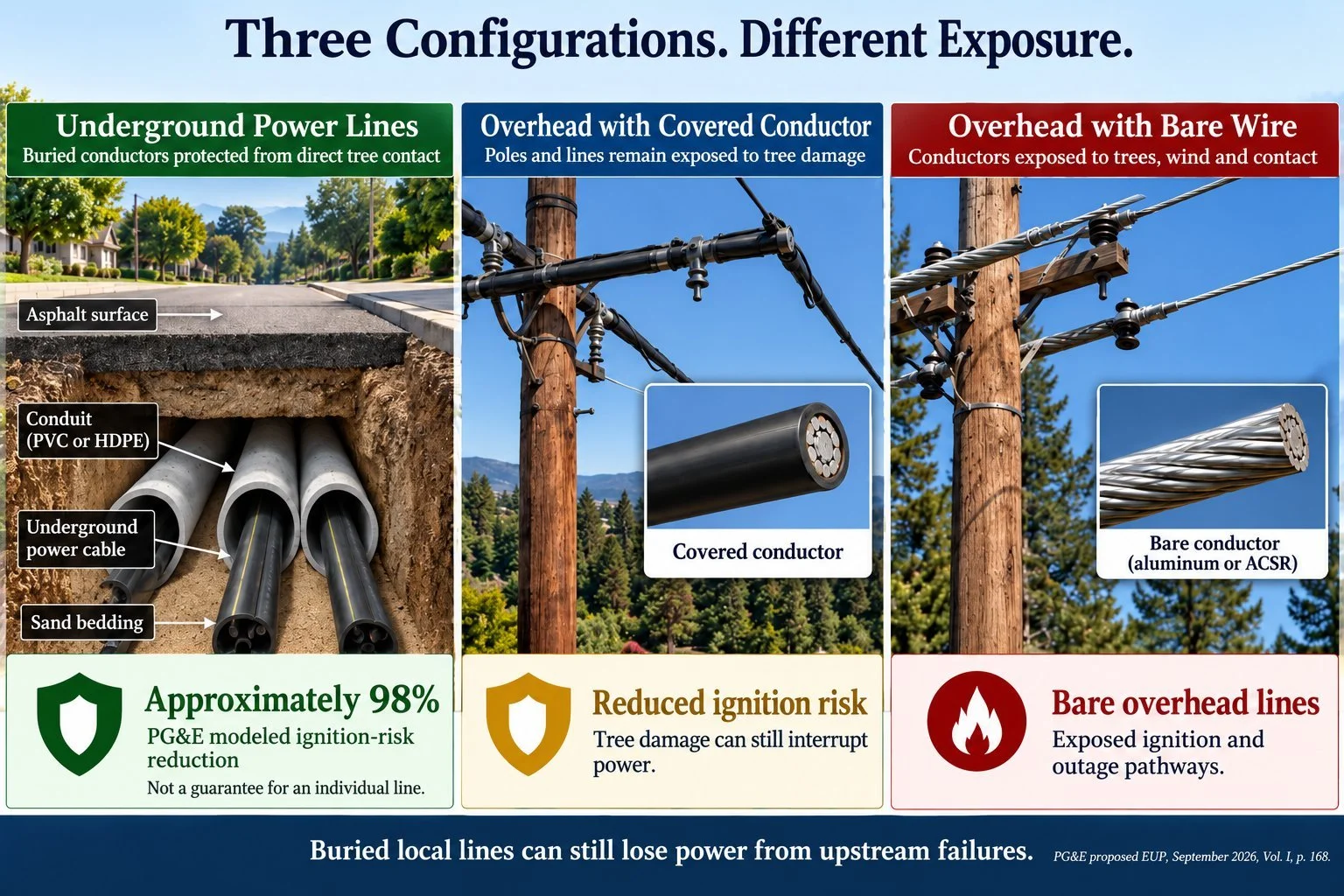
Most wires at the top of a utility pole are bare metal. They are safe only while they stay apart from each other and from everything around them. When a branch bridges two wires, or a wire falls, the result can be an arc hot enough to ignite dry grass, leaves, and bark. Always treat a fallen power line as live. Never approach it.
What the numbers say
PG&E estimates that undergrounding primary distribution lines cuts wildfire ignition risk by about 98 percent where the work is done. This is a modeled systemwide average, not a guarantee for any one line. PG&E also reports about 90 percent fewer faults causing sustained outages on circuit sections after they were undergrounded. Source: PG&E proposed Electrical Undergrounding Plan, September 2026.
A permanent fix, not a yearly chore
Tree trimming, inspections, covered wire, and safety shutoffs all reduce risk. Each one works only if someone keeps doing it, year after year. Undergrounding removes the conflict between wires and trees instead of managing it.
What undergrounding does not do
It does not stop every wildfire. Fires also start from campfires, lightning, and other causes. Undergrounding is one part of a safety plan that also includes vegetation management, evacuation planning, and emergency preparedness.
Where to start
Not every line is equally urgent. The greatest benefit comes where fire hazard, overhead wires, evacuation routes, and critical facilities overlap. That is why Monterey Undergrounding focuses on priority corridors.
State law: SB 884
Senate Bill 884, in effect since January 1, 2023, lets large utilities propose ten-year undergrounding plans aimed at wildfire risk. PG&E filed its proposed plan on September 30, 2026. State review is not complete, and the filing does not approve any project in Monterey. The City can strengthen Monterey's case by documenting hazardous corridors, evacuation concerns, and outage history.